Categorías


Friendship & International Collaboration

I also have a friend with whom I collaborate internationally: Jesús Iglesias. We have known each other since school and if you are reading this article, it is thanks to his collaboration. He sent me an e-mail with document attached, an excerpt of his many readings, with the following message: “If you’re interested in it, to be published. I have made an excerpt which I entitled “Friendship & International Collaboration”.

Excerpt of Dr Luis Victori’s speech, in honor of Dr Macel Pourbaix, on 24th June 1981, at Unidad de Seminarios Ignacio Chávez, Mexico DC.

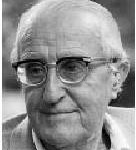
Marcel Pourbaix

Marcel Pourbaix

I was captivated by professor Pourbaix because of his clarity of exposition and his scientific rigour but, above all, I got impressed by his personality: his enthusiasm, his warmth, his friendliness… He is a person blessed with a big heart and the ability to harbour the noblest feelings.

To the question about what his favourite aspect of his work and what he considered the most important thing in his job, Professor Pourbaix answered quickly and undoubtedly:“my activities in the field of friendship and international collaboration”.

He also considered that “the most inportant thing in my life has been to instil in my children the love for the truth and faithfullness to their own counciousness”.

In my opinion, Professor Pourbaix’ life is the perfect combination between the idealist dreamer and the tireless worker who tries to make his dreams come true and who speculates, but who is also very aware of the problems in his world, problems that he tries to solve, too.

He started his way, full of obstacles, at the Université Libre de Bruxelles (ULB) in 1939: he was successively appointed substitute lecturer, work manager, conference responsible, lecturer and, finally, in 1968, when he was 64 years old, he was appointed professor of electrochemical corrosion. He had paid a high cost for his ideal of truth and his moral and intelectual independency.

The secret of his peculiarly characteristic friendship, may lie in that sentence he said to me once when I was at his home: “In my life, I try to be very demanding with myself and very understanding with the others.”

He is quite aware that his dedication to science often means taking time from his beloved ones.“I thank my wife Marcelle, who has always been my best friend and my best help. She often had to see that the wife of scientist is a widow whose husband is still alive.”

Professor Pourbaix is a tireless traveller. In Brussels, he has a map of the world on which he marks the points where he has given lectures and, above all, the places where he created bonds of deep friendship.“It is necessary to attend these meetings primarily thinking about what we can contribute with rather than what we can get.”

To me, these words are the echo of those old words which surprised the world when they were pronounced for the first time 2000 years ago: “A noble heart rejoices more at giving than receiving.”

From an excerpt of the foreword to the book “Lecciones de corrosión electroquímica” by Professor Marcel Pourbaix.

English version by Michael Thallium (@michaelthallium) from the original “La amistad y la colaboración internacional” in Spanish in collaboration with Jesús Iglesias (@cavaes)

Book your coaching process here!

Greatness Coaching Research

The Global Gen X Revolution of 2020

This is an article by Mark Goulston. He is a Fortune 500 C-Suite High Stakes Executive Coach and Chairman of Xtraordinary Outcomes and Vice Chairman of Steele Partners. If you wish to read the original article, please go to http://xtraordinaryoutcomes.com/2011/08/the-global-gen-x-revolution-of-2020/

Inspired by “All Together Now” August 28, 2011 NY Times column by Thomas Friedman

mark-goulstonIf you thought the emperors had no clothes, check out the Baby Boomers

When you read Friedman’s column above about the institutions of various countries, continents and cultures of the world, it appears that they are breaking down as the younger generations globally are seeing what others have and how others live and how they could have and live the same.
Friedman doesn’t say it explicitly, but if you read between his lines and then look around you at the different generations, you will see that a revolution is brewing. But it is not brewing between democratic and totalitarian regimes. It is between generations. In America, the Greatest Generation that fought in WW II will be mostly gone by 2020 and may they go and rest in peace for what they fought and sacrificed so that succeeding generations could prosper.
By 2020 the Baby Boomer generation will reveal much of what they’re about and what makes the Generation X’ers so angry. Just as the “Emperor has no clothes,” more and more the Boomers will be revealed to be very self-concerned, desperately grasping on to power for as long as they can (isn’t that what we’ve seen in fallen tyrants in the Arab world), entitled to have a comfortable and subsidized retirement (when they have made the financial prospects for Gen X’ers and Millennials incredibly challenging).
Much of what you see in the pathetic “zero sum,” constituents be d-amned, wrangling in Congress is a great example of how little it appears that Boomer aged officials care about their responsibilities to the people they represent vs. their own personal and partisan issues.
I think a terrific analogy is when you see divorcing parents talking about their concern for their children, but who in their actions are much more consumed with fighting and retaliating against their about to be ex-spouse.
In the year 2020 the Gen X’ers will be coming into their power and judging from what I hear from them now, they are not going to be interested in or willing to give more to the Boomers who will be heading toward the final chapters in their lives, nor will they be interested in or willing to let the Millennial children of the Boomers off the hook when it comes to being accountable.
To the Gen X’ers, blaming, complaining, finger pointing, excuse making and especially feeling sorry for themselves by Boomers and Millennials are like “nails on a chalkboard” and Friedman hasn’t said it explicitly, but has implied that Boomers and spoiled Millennials are on notice because of it.
The Greatest Generation may heed General MacArthur’s words that, “Old soldiers never die, they just fade away.”  However the Baby Boomers who have had much more than their turn at the trough and desperately want to hang onto it (just look as some of our elder statemen who just can’t say goodbye to the spotlight), may in all likelihood, “Not go gently into that good night, but rage against the dawn.”  If they try that, they might find themselves facing the same fate as the fallen and falling dictators around the world at the hands of the generations who follow them.

Mark Goulston

Jennifer Sertl: Brutally honest, Ruthlessly Frank

(If you want to see the original interview, please visit Dr Amit Nagpal blog)

1) Tell us something about your book, “Strategy, Leadership and the Soul”

In 2005 I met Koby Huberman my co-author at an amazing conference called Forum 21 http://www.forum-21.com/whatIs.asp

Koby was speaking about “open space” technology and how he was using that method to create conversation circles in his own community between Arabs & Israeliss.

I was speaking on the topic “If You Want to Change the World, Change Your Life: Micro-shifts = Macro-impact”.

We each had a plan on how to share all of the information we had learned and wanted to become accountability partners. In this we scheduled a call two times a month over Skype. I know Skype is popular now but in 2005 it was innovative to use.

Because our conversations were so rich we decided to have them transcribed. Over the course of two years a pattern emerged and we noticed that everything we discussed fit either strategy, leadership or soul. We really had something and knew the message was scalable.

So we gathered information and perspectives for three years, organized the information for one year, and it took a year to find a publisher. We were so pleased that Triarchy Press published our work in 2010.

Link to the 1st Chapter of the book: http://www.agility3r.com/Book/Chapter-1.html

2) Explain ‘Agility’ and its components in simple words.
I started my own company in 2000 and it was called Customer Service Alliance. We did customer & employee satisfaction surveys and consulting regarding improving scores. I was deeply impacted by Thomas Friedman’s The World is Flat.

In fact I was lucky enough to interview him: http://tcollins.hipcast.com/download/7872866e-0a28-24bb-9aed-b39e3650bfd0.mp3

After reading his work, I decided competitive advantage had less to due with surveys and more to do with mental conditioning. I felt the greatest contribution I could make is by helping individuals & organization get better conditioned for the macro environment, globalization, and scenario planning.

It was then, I changed the name of my company to Agility3R.

I believe the most important skill today is agility and it is defined by resilience, responsiveness & reflection

* These can be interpreted at the individual level as well as enterprise wide

Resilience has three implications

1) how well you bounce back from failure
2) how well you learn from that failure and also inform the entire eco-system of that learning so the lesson can be scaled
3) diversity of experience–the more robust and diversified a person’s experience-the higher the probability for resilience (going to how cells has so much information they had to separate into two cell)

Responsiveness
The more accurate the read on the landscape the more appropriate the interpretation.
Being responsive means looking into and environment and being able to assess the most appropriate way to “be” in that environment in order to create value
Being able to process “just in time” informaiton and integrating that synchronistically into both behaviour and especially language

Reflection
Valuing quiet – no activity time in order for sense-making to accur.
Creating buffers in for patterns to emerge, for retro-review of activities to assess for learning and or future adjustments
Space for deepening of insights and space for “magic” to occur (theory-U jazz) in this space

3) What are the major services provided by Agility 3R to its clients?

Our company now focuses on three primary offerings:

1) Team Leadership–six month training that incorporates coaching & a customized multi-media curriculum designed based on the source of competitive advantage (for cross-functional teams ranging from 6-18 participants)
2) Keynote talks – customized interactive lectures that invigorate employees & foster higher level strategic thinking
3) Interplay Business Simulation – a facilitated board game experience that allows intangible assets to gain more visiblity as you take a company through a business life cycle from start-up to full maintained with challenges from the macro and the need to write and perform an investor presentation

Key outcomes or the promises our work makes include:

  • Swifter and more decisive
  • More efficient in your decision-making
  • More confident in the choices you make
  • Increased effectiveness in leading your sphere of influence
  • More in control of the complex world you compete in
  • A better champion for your brand both company & personal

(for more robust descriptions of our offerings http://www.agility3r.com/offerings)

4) What exactly is Mindshare and how does it provide competitive advantage?

I just love this slide. When I was a manager at a 200 person call center, we sold phone service & benefits. If we could sell call waiting & caller ID, we would have more of your wallet.

Walletshare was a marketing conversation about how to gain more of already existing customers. Today, if you understand your own mind and how it works, your triggers, your inspiration etc. You will probably make wiser choices as self knowledge allows for more choices (at least one would hope). In addition, if you also understand the neuroscience of those in your business ecosystem — you will probably have more lead time to learn & adopt as their world changes you have an edge.
I say that your value isn’t in what you do or where you work. Your value is in the level of accuracy in your own interpretation of reality and the way you choose to articulate your life experience.

That is mindshare and that is truly today’s currency.

5) What is Existential philosophy?

According to Wikipedia, “Existentialism is a term applied to the work of a number of philosophers since the 19th century who, despite large differences in their positions, generally focused on the condition of human existence, and an individual’s emotions, actions, responsibilities, and thoughts, or the meaning or purpose of life. Existential philosophers often focused more on what they believed was subjective, such as beliefs and religion, or human states, feelings, and emotions, such as freedom, pain, guilt, and regret, as opposed to analyzing objective knowledge, language, or science.” For more, http://en.wikipedia.org/wiki/Existentialism

I got two Bachelor of Arts from University of Colorado in Boulder. One in Existenital philosophy and the other in English.Who would have thought a liberal arts major from the West would end up being a business coach with a passionate and loud voice for strategy?

I cannot tell you how much philosphy has impacted my success. I started learning about philosophy when I was an eight year old child. My mother -who is strong, beautiful and talented, was also struggling with mental illness.

At the time, there weren’t so many regulations and when she was hospitalized, I would visit here the hospital and play ping-poing and drink chocolate milk with the other patients. Eight years old is before shame enters–so I had no problem jumping into character and learning what the world looked like from their point of view.

It became a game to me as a child and one I certainly benefited from as an adult. Now you can understand how much I fell in love with Immanuel Kant when I learned about his contribution to the theory of subjectivity. Prior to him people believed one text, one experience. He said, no– one text, a multitude of experiences.

Anyway, I was thrilled to know that other people were curious about ways of knowing and ways of being. I dived in, and if you happen to follow me on twitter you know the water gets deeper and deeper. Learning how to honor indiviudual point of view and compassionately see from their vantage point is vital for the multiplicity of the globalization that is occuring.

I am so lucky my life gave me such early training and I am tested and cutting new edges each day in both intelligence and compassion.

Thanks a lot Jennifer for sharing your deep insights on leadership, strategy and the soul with us. I really respect you as a thought leader in the field.

_____________________________________________
Brief Profile
Beacon of hope. Purveyor of discipline.
Global Citizen. Transleader.
Coach. Facilitator.
Author- Strategy, Leadership & the Soul and Founder of Agility3R.

Links
Youtube
http://www.youtube.com/watch?v=jS5BpO6l8mo
Amazon
Strategy, Leadership and the Soul: Resilience, Responsiveness and Reflection for a Global Economy

Thanks to Dr Amit Nagpal for his permission to publish this interview here.

Michael Thallium
Global & Greatness Coach

Elena Piras: “Music, My Lifesaver & Inspiration”

Last night I was chatting with a Scottish friend of mine via Facebook and she told me she would like to get me introduced to a friend of hers. My dear friend said I would really, really fancy her because: a) she was from Sardinia, b) she was 35 and c) she plays guitar and sings very well.

I did some research on the Internet and, thanks Google, Facebook and some ability to filter information, I ended up finding some Elena Piras and I think that’s the girl my friend was talking about. Well, I’ll say no more. I just leave you with the text you can find yourself on Elena Piras web page.

“Music is one of the main things that has kept me going – my lifesaver and inspiration.’ From an article in the Sunday Herald Magazine.

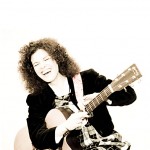
BLIND since birth, ELENA PIRAS IS A FOLK, OPERA and JAZZ SINGER from Sassari in Sardinia who moved to England aged 18. She went on to work at the Royal Scottish Academy of Art in Edinburgh, and now lives in Glasgow.

Picture taken from Elena Piras oficial web page

Picture taken from Elena Piras oficial web page

“When I get up in the morning, I don’t really know what I look like. I’ve been blind since birth and had a hard time in childhood. Lack of tolerance is a problem in Italy, where the general attitude is that the shortcut to anywhere is the best approach.

Yet being blind hasn’t stopped me from spotting many things around me, things that surprise other people as they don’t expect it. I had to grow up quite quickly, because I needed to learn some things before anyone else. I had to choose the subjects I wanted to do at school very much in advance of the other pupils. For example, there was no room for changing my mind as the books had to be prepared for me in Braille from an early stage.

I lived in Edinburgh for a year, after moving from London. Whilst there I used to listen to Radio 4 to find out what was going on the world. I don’t know what I’d do without my digital radio – it is my one contact with the outside world as I don’t watch much television. Television only gives you one point of view, and isolates you to an extent. Lots of information is now on the Internet, which can be difficult for me to access.

When I stayed in Edinburgh I was working as a research assistant at the Royal Scottish Academy of Art and through this I began to network with people and get to know a lot about the musical events happening in Scotland. It was at events such as the opening of the annual exhibition in Edinburgh that I met people, including art gallery owners and people in the music business. All I had to do was stand there, and people would come up and speak to me, and one conversation led to another.

Although I have been doing temporary jobs such as voluntary work for the RNIB and even waitressing at Dans le Noir – the new London restaurant where people eat in the dark – my real goal is to sing professionally. I love music. It is one of the main things that has kept me going – my lifesaver and my inspiration. My father used to sing in the village choir in Sardinia and was passionate about folk music, which I was introduced to from an early age. People say folk music is easy, but it is actually one of the hardest types of music as it evokes the culture and enthusiasm of a whole country, embodied within a song. But I also have classical music ingrained in me and I love to sing opera – no doubt influenced partly by my Italian roots. It is a field that truly doesn’t make any distinctions between people. Puccini, for me, is the most inspiring, and the most challenging to sing.

I joined the church choir at the age of seven and by the time I was 10, I was appearing on a local Italian TV station every Saturday afternoon. A t 14, I joined a professional choir. I decided to go to Hereford, in England, to attend the Royal National College for the Blind, because I wanted to learn how to use a white cane, and there was only one school in Italy which taught this. A lady who volunteered there got in touch with me in London a few years later to ask if I was interested in forming a Bulgarian choir with her. We set up the London Bulgarian Choir and I went on tour with them in Bulgaria. I still sing with them, and it is actually doing very well – making it to the final of the Choir of the Year competition in Cardiff a couple of years back.

Despite such public performances, my visual impairment still prevents me from doing a lot of things. People find it amusing I have no problems getting on a train from London all the way to Glasgow, where I now live, yet I still have to muster the courage to walk into a bar alone, although this is something most ladies have difficulty with! I have performed various gigs at numerous bars, clubs and theatres in Scotland. I have also recently performed at a number of festivals around the country such as the Perthshire Amber and Girvan folk festivals. I am currently attending Stow College in Glasgow, where I am a student of ‘Scottish Traditional Music’.

I would love to show that people are people and they don’t need to be treated a different way because of how they appear. I couldn’t count how many times people talk to me as though I were an idiot, and yet, when people ask if I need help, I always say yes, because to be honest, I do.

Before I go to bed at night, I try to read. Which takes me months. I have contact lenses, which allow me to see to an extent, as long as I have the page stuck to my nose! Or I listen to Book of the Week on the radio. In these respects, I am just like any ordinary person.”

This article is from August 2006, so some information may not be updated. However, I wish someday I get to know Elena Piras in person.

If you wish to know a little bit more about Elena Piras, please visit her web page and Youtube Channel:
http://www.elenapiras.com/
http://www.youtube.com/user/elenapiras

Michael Thallium

(Español) ¡Concienciaos!

Sorry, this entry is only available in Español.

Jennifer Sertl & The Transleadership

Some months ago, I saw a message on Twitter by some John C. Maxwell saying something like “if you want to know what leadership is, Jennifer Sertl is the person to ask”. Then I decided to find out about her and I ended up watching a video based on a great book called Strategy, Leadership & The Soul written by Jennifer & Koby Huberman. To make the story short, I got in touch with Jennifer and I experimented myself what an example of transleadership she is. So, I decided to humbly collaborate with her and bring her message to Spain (the country I live presently) and Spanish speaking people around the world.

I invite you to research on this concept: transleadership. Here you are a talk by Jennifer at the Marist College . I’m sure you will learn a lot from her. Enjoy it!

Michael Thallium
Global & Greatness Coach
Reserva tu proceso de coaching aquí

“Azrial”, Keith Emerson & The Nice

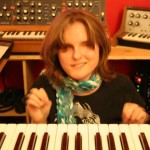
Rachel feliz“Azrial” is one of my favorite pieces to play by The Nice. I was combining a few versions of this song, mostly the early ‘69 version from their third album called Nice, America the BBC Sessions and a little of the original from ‘67 which is slower. I quoted a lot of ideas from songs like “Tantalizing Maggie”, the Elegy version of “Hang On To a Dream”, and “Infinite Space” conclusion from E.L.P.’s Tarkus album. During the middle of the piece, I felt for one of the strings on the piano by hearing it to try to make the Lee Jackson staccato bass effect, which follows the piano improvization. This is my favorite part of the piece. This is from the ‘69 and the BBC version. I quoted a lot of Emerson ideas and some of my own, especially during the build, which is my favorite part. I also sang the vocal part, which people won’t really hear, but this part was originally sung by Lee, and then by Keith on the BBC, but I still like the early ‘69 version. I tried to figure out how to end my improvisation, but I just kept building and building , like their version of “She Belongs to Me” from their third album.


I really enjoyed going inside the piano and plucking the strings, just like what Emerson did on “Hang On To a Dream” on the Elegy album, which is one of my favorites. I really enjoyed playing this piece.

Rachel Flowers
RachelFlowersMusic on MySpace
12StringBabe on Youtube
RachelFlowersMusic on Youtube
LongLiveRachel on Twitter
LongLiveRachelFlowers on Facebook

(Español) Orientación a resultados concretos I

Sorry, this entry is only available in Español.

(Español) Ideas de Expomanagement 2011 III

Sorry, this entry is only available in Español.

(Español) Ideas de Expomanagement 2011 II

Sorry, this entry is only available in Español.