Learning a language is a bit of a challenge. And as it happens with every challenge you face in life, it requires time and dedication. Her you are a video with some simple sentences you can practise. The exercise is about listening and repeating:
December is the last month of the year. It’s actually the last month of all the years in our lives. And for many people in the world this is a moment to recap, reflect and make some resolutions. Regardless of your religion or creed, of whether you indeed want to recap or not, whether you want to reflect or make any resolutions at all, if you are reading these words right now, I have a wish for you, a very simple wish: May the flame of enthusiasm shine on you, so that you can transform the reality around you and kindle other “fires”. For this is real enthusiasm: to have the power in you to transform the world around you.
In the end, a new year is just nothing but an excuse. You can actually do it at any time as long as you are aware of that power within you. And this is my wish for you… and for me, too.
The following video is created for those people who would like to learn German. On it, I tackle some verbs. This video may not make you smarter, but for sure it will make you less ignorant. At least, I hope so…
1685 is quite a significant year for me. It was the year Johann Sebastian Bach (1685-1750) was born —it’s somehow funny: presently we tend to say “Johann Sebastian” but in his lifetime, Bach was called “Sebastian” or “Sebi”, not “Johann” at all—. When I was little, I wanted to become an organist like Bach… but this is another story for another occasion.
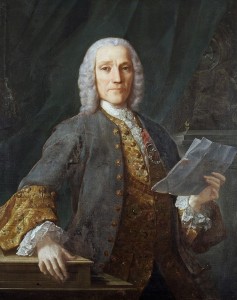
1685 was also the year when two other great musicians of the baroque were born: George Friedrich Haendel (1685-1759) and Domenico Scarlatti (1685-1757). It’s precisely the latter that I want to refer to here in this article. Domenico was the sixth child -of a total of ten children- of the great musician Alessandro Scarlatti (1660-1725). He was born in the Kingdom of Naples, which bach then belonged to the Spanish Crown. Alessandro was a really prolific composer and he himself took care of his son’s musical education. Both Scarlattis, father & son, left their own strong imprint in music: Alessandro changed the language of opera and developed the opera overture turning it into a sort of “proto” symphony —a good example of it is the overture of his opera La Griselda (1721)—; Domenico, some years later, developed the language of the keyboard sonata —he composed over 550 of them—. Alessandro’s fame eclipsed Domenico’s career as a musician. In fact, Domenico decided to fly the nest in order to develop his music career away from his father’s fame. So he left for Lisbon where he worked as a music teacher for princess Barbara of Portugal. When Barbara married the Prince of Asturias, the future Ferdinand VI, in 1729, Scarlatti moved to Spain with her, first to Seville and four years later to Madrid, where he would live until his final days in 1757.
We know very little about Domenico Scarlatti’s life. He had nine children, four with his first wife, and Italian woman, and five with his second wife, a woman from Cadiz, Spain. Domenico lived at 35 Calle de Leganitos in Madrid. He taught Antonio Soler (1729-1783) among others. His adiction to gambling brought him to the edge of ruin. It was Barbara, the queen consort of Spain, who saved him and paid off his gambling debts. I think it’s both imprecise and unfair to sum up Scarlatti’s life in just five lines, but I invite you to find out about his life. Luckily, we have his music. On the following videos, you can see the Spanish pianist Julio César Setién playing some three of Scarlatti’s sonatas:
“The sad thing is that I have to leave with so much to say.” – Béla Bartók (1881-1945)
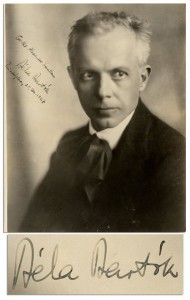
It was the morning of September 26 of 1945. World War II had finished just four months before with a benevolent balance of 50 million people killed. Grape sugar was the only food that had kept him alive at the West Side Hospital in New York in his last week of life: his painful final week. A sudden and sinister drop in Bartók’s temperature five days before had made his doctor persuade him to be taken to hospital. There had been years of hardship for many millions of people, mainly in Europe. He had not been an exception. Like many other people, he had suffered the outrage of a gruesome war and, like many else, he exiled himself to the USA with his second wife, not without first fulfilling his duty as a loving son and looking after his mother Paula: he would not leave Hungary until his mother died in 1940. However, it was not the war that made him depart from this world, but leukaemia. A New York newspaper read:
“Béla, on Wednesday, Sept. 26, beloved husband of Edith Bartók father of Béla and Peter Bartók. Services at “The Universal Chapel, Lexington Ave., at 52d St. on Friday, Sept. 28, at 2 P.M.”
Béla Bartók, one of the most important composers of modern music, an outstanding specialist in musical folklore and a teacher of wide repute, died on the morning of 26 September 1945 at the age of sixty-four.
It seems impossible for me to accurately sum a person’s life up in just a few lines. Not even a book would be enough just as a mere approximation. No book can truly shape a person’s life, for life is lived individually every minute, every second. The most words can aim at is fixing an idea about someone, an idea whose likelyhood is something we will never be completely sure of. Above all, when you try to remember those great figures in history and their achievements, those achievements we are amazed at. Human beings, we are sometimes so synthetic that we tend to identify a person’s life with a headline, with a bunch of words, thus creating a myth sometimes. Well, those great figures were and are human like the rest of us mortals, with their hidden life experiences, their private experiences and public experiences (the least abundant of them all). I pretty much doubt that Béla Bartók —as self-aware as he was of his worth and his genius as a composer— had ever thought he could go down in history someday and even that someone would include him in the groupd of The Five B’s. In fact, his name is unkown for most people on this planet Earth. Only those who have studied music —Western concert music, to be accurate—, if so, they may have heard of him or played his peculiar Mikrokosmos, that particular world of Bartók for piano learners.
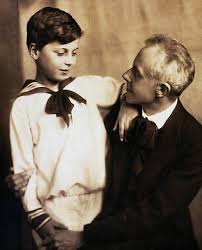
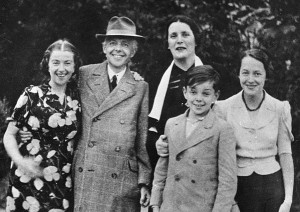
Bartók, whose music has been criticised as being inhuman by many —I myself have mistakenly thought so sometimes, too—, was a human like the rest of us all. He got married two times. From his first marriage to Márta Ziegler in 1909 —she was 16 years old back then— his first son Béla Bartók junior was born. As a couple, they would undergo World War I, but their marriage would go down the drain as years went by. The summer of 1923 was a time of upheaval for Bartók: his marriage to Márta was irretrievably broken down. In Hungary, divorce was legislated by the 1894 Marriage Act under which two legal faults leading to divorce were stated: one absolute, which included adultery; and another one relative, which included “serious violation of marital duties”. Obviously, it must be pressumed that some fault, absolute or relative, was admitted by Bartók, because the divorce was concluded swiftly. Over that summer of 1923, Bartók had become seriously attracted to one of his piano students, Edith Pásztory (1903-1982). Ditta, as she was generally known, was the daughter of a high school maths and physics teacher and his wife, a piano teacher. Ditta and Béla got married. Márta, despite the traumatic events she was dealing with, continued to working as Bartók’s copyist. Apparently, their marriage had concluded without overt acrimony. After a couple of years, Márta would marry an engineer, Károly Ziegler.
Ditta and Béla had a son, Peter. The couple toured internationally performing Bartók’s music. It was Ditta who championed her husband’s music. The same way he had done with his first wife in the early years, Bartók dedicated some of his works to Ditta, in particular, the Piano Concerto no. 3, one of his last works. Bartók wrote this concerto in the final weeks of his life. It was intended as Ditta’s birthday present, but Bartók died before he could finish it, leaving 17 bars without orchestration.
Luckily, there are some testimonies of Bartók’s integrity and fastidiousness. In 1944, being Bartók quite ill and depressed, a famous violinist approached him and asked him to write something for him. Bartók not only wrote something, but he wrote a real masterpiece:
“I knew he was in financial straits, that he was too proud to accept a handout, that he was the greatest of living composers. Unwilling to waste a moment, I asked him the afternoon of our first meeting if I might commission him to compose a work for me. It didn’t have to be anything large-scale, I urged; I was not hoping for a third concerto, just a work for violin alone. Little did I foresee that he would write me one of the masterpieces of all time.”
That famous violinist was no other than Yehudi Menuhin (1916-1999) and the work he is referring to is the Sonata for violin solo.
Who was then Bartók? For some people, he was cold, lacking emotional intelligence, remote, detached, mathematical, unfriendly, pedantic, caustic and humourless; for some others, he was warm, passionate, friendly, caring, engaged, good humoured. How is it possible that the same man elicited these entirely contradictory responses? Well, he was as human as any of us can be. It has even been suggested that Bartók had Asperger syndrome. However, there are some attributes of him that both his detractors and his supporters generally appear to agree about: Bartók was honest, “clean-fingered”, fastidious, egalitarian, industrious and lacking any motivation by material success. His best and lifelong friend, the composer Zoltán Kodály (1882-1967) spoke very wisely about Bartók: “even if it is true that these qualities emerged at times, man is not so simple a phenomenon that his eternal secret can be solved by a label with a few lines on it.”
And there is one more thing, as human as Bartók can be, his life’s work can be regarded as simply “superhuman”.
Recomended works by Béla Bartók:
Six String Quartets, 1909-1939. Concerto for Orchestra, 1943. Sonata for Solo Violin, 1944. Piano Concerto no. 3, 1945.
“It is a mystery to me what strange, secret codes enable a man, dead for centuries, to communicate with absolute clarity his most profound life experiences to successive generations. I suppose that therein, ultimately, lies the greatness of Art.” Raúl Mallavibarrena (Oviedo, Spain, 1970)
The Empress Maria of Austria, the eldest daughter of Emperor Charles V and Isabella of Portugal, died at the Monastery of Las Descalzas Reales in Madrid in 1603 after spending half of her life abroad, giving birth to 15 children and years of quarreling with the most corrupted man in Castille, the 1st Duke of Lerma. Maria had been born 75 years earlier at the Royal Alcazar of Madrid, which would disappear two centuries later in a devastating fire in 1734. Interestingly, composer Domenico Scarlatti would be a first-hand witness of that fire. The present Royal Palace of Madrid is erected upon the former Alcazar.
The retirement of Maria of Austria at Las Descalzas Reales was accompanied by the music of the Avila born Tomas Luis de Victoria (1548-1611). Victoria was a chaplain of Las Descalzas from 1586 until the empress’s death. It was here that Tomas Luis de Victoria wrote his Officium Defunctorum, the famous requiem in memory of the empress who had been a patroness of arts and of Victoria’s music for many years. This requiem might not be the last work Victoria wrote, but it is indeed the last he published in 1605, two years after Maria of Austria’s death. To the relevant parts of the Missa pro Defunctis, Victoria adds a Lectio for four voices on a text of Job, Versa est in luctum, and the responsory Libera me.
The Officium Defunctorum is a work that has been recorded and performed by numerous vocal ensembles and, certainly, the greatness of this music lies in all those profound life experiences Victoria is able to communicate to everyone who has ears to listen to them. Not in vain, it has been more than four centuries since Tomas Luis de Victoria wrote this masterpiece and it is, still today, a testimony of remote times, times that may sound strange to most people of the 21st century.
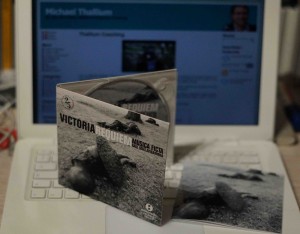
In 2017, for their 25th anniversary, the vocal ensemble Musica Ficta recorded a new version of this requiem of Victoria for the record label Enchiriadis. It is the sencond recording of the same work after the one they made back in 2002. Why “another” new version? Raul Mallavibarrena, conductor of Musica Ficta, says it his aim to make music as he would like to hear it at any given moment, championing the heritage of yesterday. It seems that the version of 2002 was without a doubt a successful recording, both commercially and personally, a winner of awards and with a sales record far superior to that of any of the Enchiriadis label. Mallavibarrena’s interpretative approach, back then, was to present “Victoria at his most unrelenting, austere, driven by the dark pessimism of the text and impelled by the dejection of its almost abyssal music, seemingly spewed from the very mouth of the end of all days and all things”.
I had the chance to listen to both versions and I would like to share my opinion here. I do it for those all people profane in early music —the “initiated” ones, probably, will not stop and read yet “another” opinion about “another” umpteenth version—, because I would like to contribute to the dissemination of this music. I will not speak in terms of better or worse, good or bad. I’d rather speak of “preferences”, and it is clear to me that the version I connect the most with is the requiem of 2017. The reading of 2002 sounds more “ceremonial” to me. Actually, the voices are accompanied by an organ and a dulcian —a woodwind Renaissance instrument, a predecessor of modern bassoon, used to accompany plain chant. I have nothing against “ceremonial” things. However, it seems to me that the reading of 2017 is closer, less strange, simpler —no instruments as accompaniment—, less “liturgical” —although still being religious music—. I could choose only one of the two readings, I would go for the 2017 requiem. Raul Mallavibarrena is likely to have found an interested listener in me, interested in his new reading. And that may be a payoff for him, moreover if my words will make somebody else to open their ears to new music and buy Musica Ficta’s record.
Yes! Yet another time: Victoria’s Requiem… Ultimately, the greatness of Art!
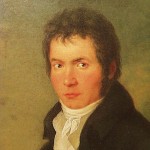
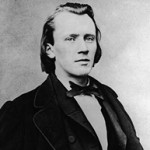
In Western concert music history they usually speak of the Three B’s: Bach, Beethoven and Brahms. Originally, these famous three b’s were coined by the German composer and writer Peter Cornelius (1824-1874) in 1854, but instead of Brahms, Cornelius had placed the French composer Hector Berlioz (1803-1869) on the list. Some years later, the famous German orchestra conductor Hans von Bülow (1830-1894) wrote Berlioz off the list and added Mr Brahms… And so Johann Sebastian Bach (1685-1750), Ludwig van Beethoven (1770-1827) and Johaness Brahms (1833-1897) remained indissolubly united in the history of western music as the Holy Trinity. There is no doubt that Robert Schumann’s (1810-1856) words dedicated to Brahms as the “true successor of Beethoven” had a lot to do in adding Brahms to that list.
Ludwig van Beethoven
This list of the three had quite an obvious German tinge. The three composers were born in a German cultural environment. Bach was born in Eisenach and developed all of his career between Thuringia and Saxony, that is, in the centre of present Germany; Beethoven was born in Bonn, but he developed most of his career in Viena (back then the capital of the Austro-Hungarian Empire); Brahms was born in Hamburg and, like Beethoven, he developed his career in Viena. None of them were contemporaries: Beethoven was born twenty years after Bach’s death; Brahms six years after Beethoven’s death. However, Beethoven was deeply influenced by Bach (specially his late works); Brahms was influenced by Bach and Beethoven.
These Three B’s have dominated musical history from the second half of the 19th century almost up to our days. I dare to say the Three B’s are no more than a symptom of musical culture centered in Germany and Austria. However, the rules of the game changed as the 19th century came to an end and over the 20th century. Music was decentralized… And that is why I speak of “The Five B’s”: Bach, Beethoven, Brahms, Bartók & Britten.
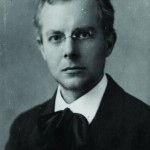
Béla Bartók
The Hungarian composer Béla Bartók (1881-1945) was born while Brahms was still alive. Bartók’s early works are clearly influenced by Brahms, although he later developed a peculiar and unique muscial language which makes his music hard to categorize. Bartók was a witness of the crumbling of the Austro-Hungarian Empire —he was born in the Austra-Hungary of the time; presently, the town Bartók was born and other towns he lived in do not belong to Hungary but to Romania and Slovenia, for example— and of two World Wars during the 20th century.
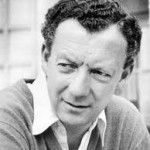
Benjamin Britten
The British Benjamin Britten (1913-1976) was born 32 years after Bartok. So, they shared their steps on this planet Earth for about 30 years. Like Bartók, Britten developed a unique musical language. People who have hardly listened to their music, they might find more things in common between Bartók and Britten than between them both and the three preceding German composers. Not in vain, Bartók and Britten composed their works during the 20th century and, definitely, this is something that binds them together. Both composers drink from the same sources of Bach, Beethoven and Brahms. But they both create a distinctive musical language as well, quite different from that of the three Germans.
So, the five b’s (Bach, Beethoven, Brahms, Bartók & Britten) is a list that may include some other musicians in the future. The poor Mr Hector Berlioz fell off the list over 150 years ago and I have not included him in this one either. I consider these are the b’s, and no others, the ones which deserve to be together. The music history yet to come will no longer be exclusively German, not even European. And there may be nobody else willing to speak about the five b’s except for me on this page.

 It was the morning of September 26 of 1945. World War II had finished just four months before with a benevolent balance of 50 million people killed. Grape sugar was the only food that had kept him alive at the West Side Hospital in New York in his last week of life: his painful final week. A sudden and sinister drop in Bartók’s temperature five days before had made his doctor persuade him to be taken to hospital. There had been years of hardship for many millions of people, mainly in Europe. He had not been an exception. Like many other people, he had suffered the outrage of a gruesome war and, like many else, he exiled himself to the USA with his second wife, not without first fulfilling his duty as a loving son and looking after his mother Paula: he would not leave Hungary until his mother died in 1940. However, it was not the war that made him depart from this world, but leukaemia. A New York newspaper read:
 It seems impossible for me to accurately sum a person’s life up in just a few lines. Not even a book would be enough just as a mere approximation. No book can truly shape a person’s life, for life is lived individually every minute, every second. The most words can aim at is fixing an idea about someone, an idea whose likelyhood is something we will never be completely sure of. Above all, when you try to remember those great figures in history and their achievements, those achievements we are amazed at. Human beings, we are sometimes so synthetic that we tend to identify a person’s life with a headline, with a bunch of words, thus creating a myth sometimes. Well, those great figures were and are human like the rest of us mortals, with their hidden life experiences, their private experiences and public experiences (the least abundant of them all). I pretty much doubt that Béla Bartók —as self-aware as he was of his worth and his genius as a composer— had ever thought he could go down in history someday and even that someone would include him in the groupd of
  Bartók, whose music has been criticised as being inhuman by many —I myself have mistakenly thought so sometimes, too—, was a human like the rest of us all. He got married two times. From his first marriage to Márta Ziegler in 1909 —she was 16 years old back then— his first son Béla Bartók junior was born. As a couple, they would undergo World War I, but their marriage would go down the drain as years went by. The summer of 1923 was a time of upheaval for Bartók: his marriage to Márta was irretrievably broken down. In Hungary, divorce was legislated by the 1894 Marriage Act under which two legal faults leading to divorce were stated: one absolute, which included adultery; and another one relative, which included “serious violation of marital duties”. Obviously, it must be pressumed that some fault, absolute or relative, was admitted by Bartók, because the divorce was concluded swiftly. Over that summer of 1923, Bartók had become seriously attracted to one of his piano students, Edith Pásztory (1903-1982). Ditta, as she was generally known, was the daughter of a high school maths and physics teacher and his wife, a piano teacher. Ditta and Béla got married. Márta, despite the traumatic events she was dealing with, continued to working as Bartók’s copyist. Apparently, their marriage had concluded without overt acrimony. After a couple of years, Márta would marry an engineer, Károly Ziegler.
 The Empress Maria of Austria, the eldest daughter of Emperor Charles V and Isabella of Portugal, died at the Monastery of Las Descalzas Reales in Madrid in 1603 after spending half of her life abroad, giving birth to 15 children and years of quarreling with the most corrupted man in Castille, the 1st Duke of Lerma. Maria had been born 75 years earlier at the Royal Alcazar of Madrid, which would disappear two centuries later in a devastating fire in 1734. Interestingly, composer Domenico Scarlatti would be a first-hand witness of that fire. The present Royal Palace of Madrid is erected upon the former Alcazar.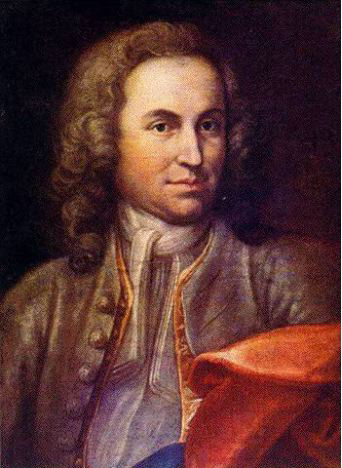
 These Three B’s have dominated musical history from the second half of the 19th century almost up to our days. I dare to say the Three B’s are no more than a symptom of musical culture centered in Germany and Austria. However, the rules of the game changed as the 19th century came to an end and over the 20th century. Music was decentralized… And that is why I speak of “The Five B’s”: Bach, Beethoven, Brahms, Bartók & Britten.