How long has it been since I wrote my previous article on this blog? Yes, some 604,800 seconds, that is, a week. Yes, time goes by very quickly. Above all if you flow! When I started to write this series of articles on happiness and blissfulness, I was inspired by a course by Raj Raghunathan entitled “A Life of Happiness and Fulfillment” (at the bottom of this article you will find a link to this course). If you could not read my three previous articles or you did not do the exercises I presented in them, here you are the links:
In this fourth article of this series, I will present exercise no. 4, which is not my favorite for reasons I will explain below. However, it is likely the one which brings more physical and personal benefit of them all.
What is capital sin no. 4 against happiness? Being overcontrolling, wanting to have absolutely everything under control. (“If everybody would behave the way I want, if they would do as I say, I’m sure the world would be a better place; I can’t understand why “the others” don’t see it that way!”). What I mean is that desire to control the external environment, in other words: the external control. Some studies show that people who have control over their decisions they live longer than those who do not. However, when that control turns into “overcontrol”, then the levels of happiness and satisfaction decrease significantly.
When you over control people, their response is usually negative. The same way we want to control the others, the others tend to not want to be controlled. In addition, there are people who also want to overcontrol the results. I am introducing here the concept of “psychological reactance”, but I will not go deep into it (you can find a link at the bottom of this article). For our purposes, let’s just say psychological reactance is the reaction of individuals when they feel obliged to adopt a particular opinion or engage in a specific behaviour.
When the others do not behave the way we want, we get angry, frustrated and we get disappointed. And this affects our decision making. Do not be afraid of being surrounded by people who contradict you. Moreover, get surrounded by people who are not afraid of contradicting you!
Also, when we try to overcontrol the results, we become more superstitious. Essentially, there are to ways of pursuing results:
to pursue results in the best way: IN HARMONY
to pursue results in the worst way: OBSESSIVELY.
The obsessive pursuit of a passion occurs when that thing you feel passion for controls you instead of you controlling it. The antidote against “overcontrol” is: TO TAKE PERSONAL RESPONSIBILITY OF YOUR HAPPINESS.
How can you control your emotions? Is it possible to be happy if something really bad happens to you? In theroy, it is possible, indeed. You just have to master your thoughts. But that does not mean it is easy. Actually, it is not at all. It is difficult, but you can always learn how to do it: you only need TIME and PATIENCE. We usually find two inner obstacles:
Certain kind of pessimism (“How can I be happy if I have some really bad things happening to me!!”). Well, Rome was not built in a day. The key here is “flow”. When you flow, you stop being pesimistic. The actual question you should ask yourself is this one: How can I keep the control over my emotions on a daily basis?
A misconception: “Well if I control my emotions and people know it, they will take advantage of it!”. In reality, that does not happen. Anyway, that you do not make the other person responsible of your anger, that does not mean you cannot make her responsible of her mistakes. When we lose control over our emotions, we are more likely to make wrong decisions. The same way we need to give intelligently to avoid “burnout” (creative altruism)
we also need to control our emotions intelligently.
The control of our emotions helps us avoid being “overcontrolling” (external control). Taking personal responsability of your happiness gives you a greater feeling of inner control, it decreases your desire for external control and makes you less prone to overcontrolling. The takehome message here: we need to work on our “inner control”.
Two strategies to get inner control:
to learn simple tactics to regulate emotions,
to keep a healthy life style.
What are those simple tactics?
selection of situation (avoid situations that evoke not desired emotions),
to label emotions (give name to the emotion you feel in a particular moment),
attention deployment (focus your attention on positive things and divert it from negative ones). I will not go deep into it, but just mention the concept of “self serving bias”, which is one of the fundamental mistakes in the “attribution theory”. “Self serving bias” is the tendency of individuals to attribute positive events to their own character but attribute negative events to external factors (see link at the bottom of this article) and
cognitive re-evaluationción (to reinterpret the situations in order to feel better about them, that is, to put things in perspective).
How can you keep a healthier life style? Appreciating uncertainty and lack of control, in other words, seeing the positive side of uncertainty.
This weeks exercise is about analyzing your life style and make it a bit healthier. We will take three approaches:
eat better (nutrition),
move more (physical exercise) and
sleep better (propper rest).
Eat, move and sleep!
The sitting disease. There are some studies which confirm that spending 6 hours sitting is harmful to your health. We need to move along the day (it is not enough just one hour of physical exercise and then spending 8 hours sitting). That is why, those of us who spend long hours sitting because of our jobs, we need to manage and create strategies that make us move just a bit more.
As for sleep, it is estimated that the appropriate sleeping time is about 7 hours. Lack of sleep makes us get a worse physical appearance, make worse decisions. Sleep deprivation when you drive is the same as being drunk. Also, lack of sleep is a source of insatisfaction at work and it increases stress.
What to do and not to do then? Here, some suggestions:
EAT
1 have healthy foods at hand’s reach,
2 eat from small plates (that decreases the amount of food),
3 eat from plates that are not white (dark colours are better),
4 take some healthy snacks with you when you go out,
5 start meals with healthy foods,
6 have a good and healthy breakfast.
MOVE MORE ALONG THE DAY
1 get a pedometer,
2 have breaks for 2 or 3 minutes every 30 minutes and move,
3 do some exercise at home,
4 do some exercise in the morning when you get up,
5 do something you find pleasurable to move.
SLEEP
1 minimize the sources of light (mobiles, electronic devices),
2 use a “white noise” machine that sounds at the background,
3 lower the temperature of your bedroom (just a bit cooler),
EXERCISE: ASSOCIATE TO KEEP A HEALTHY LIFE
The goal of this exercise (as I said at the beginning this exercise is not my favorite, because it requires discipline and that is something I need to work on) is to improve your life style and the urge of wanting to have everything under control. So, this exercise requires a lot more of discipline, but it also brings greater benefits. Step 1
Create a healthy life style plan that works for you (EAT WELL, MOVE MORE & SLEEP BETTER)
Warning: Do not get stressed with this exercise. Adapt it to your personal circumstances. It is about being aware of your life style and improving those areas you want to improve.
IMPORTANT: If you need a daily reminder so that you become more aware of this exercise, you can always associate with a friend or relative who reminds you of it everyday (via email, mobile or whatever).
Once you have created your plan, (do not leave for tomorrow what can be done now), answer the following questions:
Did you have trouble sticking to your plan? If you have achieved it, what do you attribute your success to? If not, why?
What are you planning to do in order to stick to your plan tomorrow or later today?
(YOU NEED TO ASK YOURSELF THESE QUESTIONS EVERYDAY FOR 7 DAYS!! I I told you it required a lot of discipline)
Step 2 At the end of the 7 days, answer the following questions: What was your weekly healthy life style plan? Did you have trouble sticking to it? Did you notice any effects on your wellbeing and on your desire to have everything under control? What do you think about participating in this exercise?
10,080 minutes! One week! Yes, that’s the time gone by since I last wrote on this blog. On my two previous articles dedicated to happiness and blissfulness (DEFINITION y GRATITUDE), I presented two exercises you can do to enhance your level of happiness. If you did not do them, I recommend you to have a look at them and to put you to the test by doing those exercises. I am sure they will do you good. Today I present anther exercise called “CREATIVE ALTRUISM” (for more information, have a look at the link at the bottom of this article by professor Raj Raghunathan).
What is the third capital sin against happiness? “The need to be loved and its opposite “the need to do everything on your own, alone”. Both cases represent two different types of personalities: the “needy” (those people who get desperate when they feel they are not love and they beg for the love of others) and the “evitative” (those who want to feel independent and want to do everything on their own avoiding beeing loved). What is the antidote against this sin? The need to love. Certainly, human beings need to feel we belong to “something”, a couple, a family, a group, a community, a society, an organization… It seems that “human touch” is essential for the development of a person in order to establish affection and love bonds. Harry Harlow (1905-1981) was a psychologist who made a series of experiments with baby monkeys during the decades of 50s and 60s in the 20th century. One of these experiments is really interesting and has to do with this “human touch” and the terrible consequences of the lack of it during childhood. At the bottom of this article, you will find a link entitled MOTHER LOVE to the video showing this experiment. I recommend you to watch it.
They usually say that happiness shared doubles and sadness shared divides. And although it is true you also have another saying “Evil of many, consolation of fools”, it is also true that pain is far more bearable when it is shared and that you feel happier when you share your happiness.
From the emotional point of view, the “needy” are desperate to feel loved at any cost, and this leads to some negative consequences that I will just sum up in one word: unhappiness. The “evitatives” want to feel independent, free, mentally strong, and this leads them to avoid getting involved in relationships. There are some studies showing that “evitative” people are usually unsatisfied with their jobs and they also feel unsatisfied when they have to ask for help to others. With their behaviour, they create a kind of estrangement with the others which, in turn, makes the others less collaborative. Thus, that estrangement gets bigger and bigger. Both behaviours, “needy” and “evitative”, are harmful to their health, because both of them generate unhappiness. How, then, can you solve this dichotomy between these two opposite extremes? With “secure attachment”, that is, keeping the balance between need and avoidance. In order to accomplish that, you can practice sefl compassion (being kind to youself), express gratitude and practice the need to love and give in an intelligent way to avoid “burnout”. It is demonstrated that generosity makes us happier, but “indiscriminate” generosity, however, is not good, because it can backfire. You must know when, whom and to what extent to give. Now, you may be thinking: “Ok, that’s ok, you have to give intelligently, but… how can you do that?” Here you are some rules:
give including yourself, that is, have into account your own needs as well as those of the other person, participate in the giving;
content the cost of the help (be aware of its cost);
exercise strategies that enhance the values of people;
see the impact of your generosity, that is, see the result of it;
HAVE FUN being generous.
Here you are this week’s exercise: CREATIVE ALTRUISM… and there is no other option but having fun with it. It is not about observing the altruistic behaviour of other people, but about acting yourself. Try to do the exercise with unkown people. You will have to make a kind of prank but in a different way. It is not about doing a favor to someone else or being good to people. It is about really making the “victim” of your prank have fun with it. And also you will have to follow the “3 rules of giving”: content the cost of giving, fun for both parties (you and the person you choose) and register the impact of your altruism. Let’s do it!
Choose one person or group of people
Create a plan or idea to carry out (if you cannot come up with any ideas, below you will find some).
Write it down.
Execute it (have in mind the cost of giviing, fun for both parties and register of the impact of your “prank”).
Questions a posteriori (answer them once you have implemented your idea)
What was your idea?
How did you execute your idea/plan? ¿Did you stick to “the 3 rules of giving”? If not, why?
How did the person feel? (When you answer this question, focus on what that person said or experienced about your act of creative altruism.)
How did you feel with this exercise? What was its impact on you?
In case you cannot come up with any ideas, here you are some:
Leave way too much tip next time you get a good service.
On a hot day, buy some bottles of water (20 for example) and give them to runners in a nearby park.
Invent some fun posters and stick them around your neighbourhood (remove them a couple of days later, of course).
Donate some books to a library, donate clothes to some organization or people who live in a poor neighbourhood.
Attend a show with a group of friends and cheer up the actors so that you make them feel the best actors in the world.
Pick up some wild flowers, make a bouquet and leave it at the door of some neighbour with a thank you note: “Thanks for being a great neighbour!”
Visit an elderly home and volunteer to sing, read or simply listen to the elderly stories.
If you don’t like these ideas, use your imagination and come up with some of your own. Good luck and… have a lot of fun! I will be back in about 604,800 seconds, that is, in a week. Til then, be happy!
Just 7 days ago, that is, 168 hours or 10,800 minutes ago if you prefer so, I published on this blog On Happiness and Blisfulness: DEFINITION. Now, 604,800 seconds later, I publish this other article on gratitude. Seven, one hundred and sixty eight, ten thousand and eighty, six hundred and four thousand eight hundred… These are just numbers equivalent to one week depending on which unit of time you take, namely: days, hours, minutes and seconds respectively. If you look back over your last week, how many seconds, minutes or hours have you been feeling happy or bliss?
The first of the capital sins against happiness is: “To devaluate the idea of happiness”. What does it mean “to devaluate the idea of happiness”? Quite simply. Many times we tend to think that feeling happy is just “bullshit”, that this is something of idle people who have the time to think about those things, that we need to meet our daily obligations, to push our projects through, to earn our bread and butter and just have fun at the weekend if possible. The antidote against this first capital sin is: “To Prioritize happiness, but not to pursue it”. In order to achieve something, you first have to know very well that what you want to achieve. Thus, 168 hours ago, that is, a week ago, I presented and exercise consisting in creating your own definition of happiness and naming three or four things you can do to incorporate that definition into your life. I strongly recommend you to do this exercise in case you haven’t done it yet, because this way you will understand the next exercise better. Next exercise derives from the antidote against the second capital sin against happiness. What is capital sin no. 2 against happiness? “To pursue superiority”. We all like to do things well and to feel “superior”, but when that feeling of superiority leads us to underestimate and undermine other people, and then we generate a source of unhappiness. What is the antidote? “Flow”. Mihaly Csikszentmihalyi speaks about it on his book actually entitled Flow. So, I’m not going to go deep into this concept, because you can take the chance and read that book and find out about it on your own. However, just in case you feel a little lazy to read, you can also watch the video entitled Flow (you can find the link below). When you flow you enhance your creativity and your propensity towards a state of gratitude, that feeling that leads you to appreciate the benefits you are granted and to respond to them somehow.
Thus, a way to avoid feeling superior to others is the practice of gratitude. And that is why I present here the next exercise (you can watch the benefits from this exercise on the link below, at the bottom of this article, entitled Science of Happiness An Experiment in Gratitude):
Choose a person or persons you want to express gratitude to.
Think about something you are grateful for.
Write a letter of gratitude to that person o persons.
Meet that person (if you can meet up, give her a call or send an email; ideally, the best is to see that person face to face) and then read out your letter to her (if the person you chose is a beloved one who has passed away, choose another person who knew your beloved one and read out that letter to her).
Write down how that person felt when you were reading that letter and what she said. How did you feel before, during and after you did the exercise?
This is a simple exercise. However, some people may find it difficult. I encourage you to do it, because you will want to repeat it once you have felt the benefits from it on your way towards happiness. Afterall, how long can it take you to do this exercise? An hour? Two hours? Three hours? Four hours maybe…? If you are planning to do this exercise over the next week and it would really take you four hours, you would still have some other 164 hours more to do many other different things if you wish.
Here you are three links to some interesting videos (do not miss the one by Loui Schwartzberg entitled “Gratitude”).
There have been lots of things said and unsaid about happiness and blissfulness. I have been in my personal quest of happiness and blissfulness for some years. And to me, that involves the “scientific method”, that is, a method that allows replication of results.
In my case, I usually draw upon the etimology of words in order to unravel their meaning. “Blissfulness” comes from old English blis, also bliðs “bliss, merriment, happiness, grace, favor,” from Proto-Germanic *blithsjo (source also of Old Saxon blidsea, blizza), from *blithiz “gentle, kind”. Originally mostly of earthly happiness; influenced by association with bless and blithe. As for “happiness”, the OED gives the following definition: The state of being happy. Quite an abstract definition, isn’t it? Therefore, the tricky thing to be happy lies in the lack of a clear, precise, concrete definition of happiness, because what does it mean that “state of being happy”? Everyone may feel that state in a different way. Something that may be very valid for me, may not be valid at all for you and otherwise. Anyway, it seems clear to me that “being happy” involves two dimensions: one spiritual or mental (and by “mental” I don’t mean “rational”, but the mind and the brain that, to me, are the generators of what other people call “spirituality”), and the other one is physical or bodily.
Some time ago, I enrolled in a really recommendable 6-week course entitled A Life of Happiness and Fulfilment taught by professor Raj Raghunathan, author of the book If You Are So Smart, Why Aren’t You Happy. I really encourage you to take up the course if you feel identify with that thing of “being so smart and not happy”. Over the six weeks of this course, you will see different theoretic concepts endorsed by scientific research and, then, each week, you will have to do an exercise to help you understand and incorporate those concepts and knowledge into your daily life. I am not going to go deep into those concepts here, because you can follow that course or find out about them on your own if you wish so. However, I will share the first exercise you can do in order to live a life of happiness and fulfilment. This exercise may look simple, but it’s not if you take it seriously:
Exercise: DEFINITION
Step 1: Write down your own definition of happiness (not long not short). What really matters is to make it your own definition. It’s your definition!
Step 2: Write down 3 or 4 things that make you happy.
Step 3: Make sure these 3 or 4 things are included in your own definition of happiness.
Paso 4: Over a period of 7 days, incorporate that definitions and things into your daily life.
In case it helps you, I will share my own definition of happiness at this moment in my life as well as the 4 things I do to “live” my definition:
To me happiness is the joy of reciprocally sharing knowledge, love and afection with empathy, authentic smile and genuine laughter; happiness is the ‘music’ of my authentic self.
1. to share new things
2. to show love and affection
3. to meet people and get to know them
4. make ‘music’ with somebody else.
Additionally, you can write a letter to yourself in which you express your true commitment to live a happier life and say what you are going to do to achieve it (get new habits, get rid of old ones…) and, also, what you will do when you come up with (and you will, believe me) some inner resistances on your way.
The Young Johann Sebastian Bach, painted in 1715 by J. E. Rentsch, the Elder
Just a day like today, 266 years ago, a man passed away at 65 while sleeping. Nowadays, this man is considered to be the musician of all musicians, the composer of all composers: Johann Sebastian Bach (1685-1750). He died as a result of an infection caused by a cataracts operation performed by an infamous English oculist and surgeon called John Taylor (1703-1772) – Samuel Johnson (1709-1784) set him as an example of “how far imprudence may carry ignorance”. It’s also quite interesting to know that German born George Friedrich Handel (1685-1759) also died because of the same eye operation by the same “surgeon” nine years after Bach’s death. By the way, all that these two composers have in common is their year of birth, 1685 (also the year of birth of yet another great composer, Domenico Scarlatti) and that they were killed by the same person. Bach and Handel never met. Handel enjoyed fame and success as a composer in his life time. Bach did not. Bach was not even considered as a second-line composer. He did enjoy, however, fame and high reputation as the best organist of his time, but his composition style was considered old-fashioned and his works were too difficult to perform by his contemporaries. Actually, after his death, a lot of his works were sold… as wrapping paper!! Yes, yes, a great deal of Bach’s works ended up wrapping food, vegetables and meat. In other words, the paper on which he wrote his scores was way more valued than its contents. Unfortunately, these are works we will never get to know.
Quite a lot of years after Bach’s death, Carl Friedrich Zelter (1758-1832) apparently bought St. Matthew’s Passion at an auction were, guess what was being sold… paper!! Would not have Zelter bought that score, it would have most likely ended up as wrapping paper. It was precisely Zelter who instilled his love for Bach’s music into his disciple Felix Mendelssohn (1809-1847). And 80 years had to go by after Bach’s death until his music was rescued from oblivion for the big audience when Mendelssohn publicly conducted St. Matthew’s Passion himself. The rest is hisory.
Bach’s influence as a composer in Western concert music has been omnipresent and all-embracing ever since. It is a great paradox that someone who had been considered a third or four-line composer in his life time, however, he marked the end of a musical style: the baroque. It is usually said that the baroque ends in 1750, the year Bach died. In reality, the musical baroque ended some 20 or 25 years earlier. If it would not have been for those last 20 years of Bach’s life, some works such as the Mass in b minor, the Goldberg Variations, the Musical Offering and The Art of the Fugue would have never come to light.
For those of you who would like to know a little more about this great man, a relentless worker and a wise musician, here I recommend some links:
La hora de Bach (in Spanish and free), presented and directed by Sergio Pagán. Radio Clásica.
By the way, the picture accompanying this article is that of a poster I asked my parents to buy for me when I was 10 or 12 years old. Back then I wanted to become an organist and a musician like Bach. I have not achieved it though…
Today I want to commemorate the day on which the man died and his legend of an immeasurable great legacy was born. I agree with Spanish organist Juan de la Rubia: Bach helps me be a better person.
“Marie Jaëll has the brains of a philosopher and the fingers of an artist.”
Franz Liszt (1881-1886)
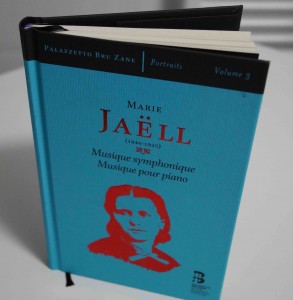
Today I would like to write something about Marie Jaëll (1846-1925) of whom I knew nothing at all until some months ago. Juan Lucas, founder of La Quinta de Mahler, talked to me about her quite well and recommended me a recording of her music published by Ediciones Singulares in Spain. That was some ten months ago or so. I did not buy that recording back then, but it remained in the back of my mind somehow. Months went by and then, on July 16th, which in Spain is the day of Virgen del Carmen (patron saint of the seas), I decided to give that recording as a present to a friend of mine, Carmen González Castro, a painter and a woman of great musical sensitivity (by the way, you can have a look at her paintings here: Carmen’s Work). I told her that I hardly knew anything about Marie Jaëll and that I had not even listened to the recording either, but someone, whose musical knowledge I really trust, had talked to me about Marie Jaëll quite well some months back. A couple of days later, Carmen called me and said Jaëll’s music was great, it had strength! So, in the end, I ended up buying the recording for myself as well. The set comes as a limited edition book, in French and English, with three CDs.
I think the work of Marie Jaëll deserves to be disseminated, and that is why I write this short article: maybe some reader is curious enough to find out about her life and work. She was a female composer in a music world made of and for male composers. She was a constant learner (I study relentlessly, she used to say) and a very hard worker.
I work, I work and I am doing wonderfully… although this shouldn’t be declared to openly. You know that I am not the same Marie who you have loved before, the composer of four-handed waltzes, who used to play the piano, who used to sew, who used to talk – I am a new person, brand new, who only composes and is absorbed in herself. Many things arise from such absorption, the result being that I am completely different… Someday or other, to watch me, you will have to plunge yourself into vast books, your head, ears and fingers all going to an awful lot of trouble… (Marie to her friend Anna Sandherr, November 26, 1877)
Marie Jaëll was born Marie Trautmann in 1846. When she got married to pianist Alfred Jaëll in 1866, when Marie was 20 years old, she took her husband’s surname as it was tradition in those times. She kept that surname until the end of her days, despite she became a widow very early, in 1881, when she was 35 years old.
I wish these lines would make someone reading them to have a look not only at Marie Jaëll the composer and pianist, but also Marie the pedagogue who even tapped into the realms of neuroscience…
Arcangelo Corelli was born in Fusignano in 1653 and he was raised in the musical surroundings of Bologna. Not in vain, he would be then granted the nickname of “il Bolognese”. However, it was Rome the place where Corelli spent the greater part of his career. In fact, he is to be found in the Eternal City from 1675 onwards as a member of various instrumental groups. Then he soon entered the service of the leading musical patrons: Queen Christina of Sweden (1626-1689), then Cardinal Pamphili (1653-1730), and finally Cardinal Ottoboni (1667-1740). Rome was at that time a wonderful city for a young musician, brimming with artistic opportunities. Throughout his career, Corelli was able to rub shoulders with the most important composers of his day, including Alessandro Stradella (1639-1682), who gave him the idea of the concerto grosso, Bernardo Pasquini (1637-1710) and Alessandro Scarlatti (1660-1725) who were fellow members of the Accademia dell’Arcadia with him. Towards the end of his life, when Corelli directed the orchestra that gave the first performance of La Resurrezione, he also met George Frideric Handel.
All these encounters where a source of inspiration and many different influences which gave rise to a very personal style. Actually, most of Corelli’s works were quickly transformed into models copied innumerable times by others. Despite Corelli did not create any new genre, nor did he contribute any specific innovation to violin technique (he was a virtuosso violinist), he did compose sonatas and concerti grossi of such formal perfection that these works permeated the whole of European orchestral discourse over the ensuing decades.
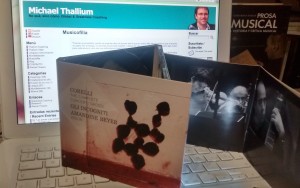
When the printer and publisher Estienne Roger (1665/66-1722) issued the Concerti Grossi opus 6 in 1714, in Amsterdam, Arcangelo Corelli (1653-1713) had already been dead for some months. Corelli had reached an agreement and singed a contract in 1712 with Roger about the publication of his last work. Those of you who would like to enjoy an excellent performance of these concerti, you can draw on music label Outhere. The French violinist based in Spain Amandine Beyer and her instrumental ensemble Gli Incogniti have recorded the complete concerti grossi. And the same way Roger North (1651-1754) said about Corelli’s work in his day, this recording is “the bread of life” of every listener who wants to approach the origins of sonata form and the modern concerto.
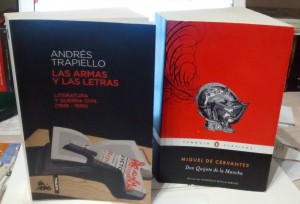
December 2015 was a particular month for me. It was the month when I undertook the reading of two books: “Las armas y las letras” (Arms and Letters) by Spanish writer Andrés Trapiello and “The Ingenious Gentleman Don Quixote of La Mancha” by Miguel de Cervantes. I recommend “Las armas y las letras” to anybody willing to learn something about Literature and History during the Spanish Civil War. It’s a reference book which left me a very good taste in the mouth. I really encourage you to read it (I don’t know if there is an English version). Reading “Las armas y las letras” acted as a spur to undertake the reading of “Don Quixote”, although I must admit I did it more “out of stubbornness” rather than pleasure.
I have tried to read “Don Quixote” umpteenth times along my life and umpteenth times I gave it up. So, in mid December 2015 I said to myself: “You’d better read it from cover to cover and without stopping; otherwise, you’ll never finish it”. And that’s what I did. It was a fruitful reading. There were moments for real laughter while reading it, but there were also moments of boredom and dull reading. Is “Don Quixote” the best Spanish novel? I wouldn’t dare to say so. Is it a very good book? Yes, indeed. However, reading it requires preparation and time.
When I said “out of stubbornness”, I meant that my goal was to finish the book once for ever more than doing it for pleasure. In my paticular endeavour there was a personal aspiration which some people may find banal, pretentious and useless. And this was my aspiration: to have read three novels which very few people in the world have read: “Don Quixote” by Miguel de Cervantes, “I The Supreme” by Augusto Roa Bastos and “The Man Without Attributes” by Robert Musil. Actually, there are many people who speak about those books, but I pretty much doubt they have ever read them.
Sometimes, only sometimes, you can achieve your goals just out of stubbornness and in a very irrational way. That can be the only motivation. No more reasons. In my case, I think there may have been a bit of vanity and conceit involved in my achievement. I just wanted to “show off” and be able to finally say I have read those three books.
Conclusion: if you want to achieve something, just undertake it for the sake of it.

 What is capital sin no. 4 against happiness? Being overcontrolling, wanting to have absolutely everything under control. (“If everybody would behave the way I want, if they would do as I say, I’m sure the world would be a better place; I can’t understand why “the others” don’t see it that way!”). What I mean is that desire to control the external environment, in other words: the external control. Some studies show that people who have control over their decisions they live longer than those who do not. However, when that control turns into “overcontrol”, then the levels of happiness and satisfaction decrease significantly.
 10,080 minutes! One week! Yes, that’s the time gone by since I last wrote on this blog. On my two previous articles dedicated to happiness and blissfulness (
 Just 7 days ago, that is, 168 hours or 10,800 minutes ago if you prefer so, I published on this blog
  There have been lots of things said and unsaid about happiness and blissfulness. I have been in my personal quest of happiness and blissfulness for some years. And to me, that involves the “scientific method”, that is, a method that allows replication of results.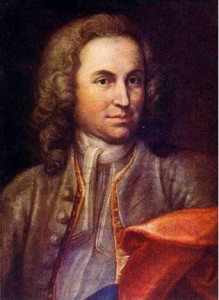
 Today I would like to write something about Marie Jaëll (1846-1925) of whom I knew nothing at all until some months ago. Juan Lucas, founder of
  Arcangelo Corelli was born in Fusignano in 1653 and he was raised in the musical surroundings of Bologna. Not in vain, he would be then granted the nickname of “il Bolognese”. However, it was Rome the place where Corelli spent the greater part of his career. In fact, he is to be found in the Eternal City from 1675 onwards as a member of various instrumental groups. Then he soon entered the service of the leading musical patrons: Queen Christina of Sweden (1626-1689), then Cardinal Pamphili (1653-1730), and finally Cardinal Ottoboni (1667-1740). Rome was at that time a wonderful city for a young musician, brimming with artistic opportunities. Throughout his career, Corelli was able to rub shoulders with the most important composers of his day, including Alessandro Stradella (1639-1682), who gave him the idea of the concerto grosso, Bernardo Pasquini (1637-1710) and Alessandro Scarlatti (1660-1725) who were fellow members of the Accademia dell’Arcadia with him. Towards the end of his life, when Corelli directed the orchestra that gave the first performance of La Resurrezione, he also met George Frideric Handel.