Entradas recientes / Recent Entries
|
 Cécile Chaminade (1857-1944)
“I think that life has been hard on women; it has not given them opportunity…. Woman has not been considered a working force in the world and the work that her sex and conditions impose upon her has not been so adjusted as to give her a little fuller scope for the development of her best self…. There is no sex in art. Genius is an independent quality. The woman of the future, with her broader outlook, her greater opportunities, will go far, I believe, in creative work of every description.” — Cecile Chaminade, composer
 Amy Beach, 1867-1944 Some weeks ago, I attended a morning chamber music recital at Teatro Monumental of Madrid, Spain, with a good friend of mine Julio César Setién. The recital was sponsored by Radio Clásica and it included piano quintets by Spanish composer Enrique Granados (1867-1916) and american composer Amy Beach (1867-1944). Truth be told, I really attended the concert because I just wanted to listen to Amy Beach’s piano quintet opus 67. Some time in the past, I had read some reviews about this American composer, but I had never listened to her music. So, the first time I listened to it was that morning at Teatro Monumental and I must say her quintet really impressed me! This led me to find out a bit more about her and her music in the following days. I ended up discovering three other female composers worth mentioning along Amy Beach: the French Cécile Chaminade (1857-1944) and the two British Rebecca Clarke (1986-1979) and Dorothy Howell (1898-1982).
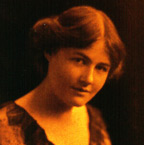 Rebecca Clarke (1886-1979) The reason why I ended up connecting the dots amongst these four female composers was that I found two recordings which I strongly recommend: one of them from year 1995 on ASV with works by Amy Beach (Piano Quintet opus 67) and Rebecca Clarke (Piano Trio and Viola Sonata) and another one on Hyperion from 2017 with piano concerts by Cécile Chaminade, Amy Beach and Dorothy Howell. I really loved Chaminade’s work “Concertstück”. Really powerful! But I couldn’t say less of Beach and Howell piano concertos. If you really want to enjoy romantic piano concerts, this recording on Hyperion is a must buy.
 Dorothy Howell (1898-1982) I can’t help but thinking that history or rather we, the listeners or performers, owe a lot to some women who seem to have tiptoed around the world of music, a world historically dominated by men. Their works have been relegated in the best of cases to a second place or, simply put, to mere anecdotes in music history. I find it very difficult to try and summarise the lives of these women in a few lines, the same way I find equally imposible for me to summarise the lives of many other male composers. I do not want to fall into positive discrimination towards women. I really think the music of these four women is worth performing and listening. Their works have nothing to envy from those of their male contemporaries. Their music is very high quality and it is up to us, those who perform or listen to music, to honour those women who once decided to dedicate time and effort to compose music. The best way to honour them is by performing and listening to their music. And this is not so easy, because there are still very few recordings of their works and musicians do not include them in their concert programs. Let’s demand their music! Let’s honour them!
Michael Thallium
Global & Greatness Coach
Book your coaching here
You can also find me and connect with me on:
Facebook Michael Thallium and Twitter Michael Thallium
 One of the words that hast lost his traditional meaning for me — and I emphasise “for me” — is the word “miracle”, namely: an extraordinary and welcome event that is not explicable by natural or scientific laws and is therefore attributed to a divine agency. If you do not believe in the divine origin of things, then it should be difficult to believe in miracles, let alone about working them. Nevertheless, I will speak of “miracles” as those events very difficult to understand which escape from human logic and reason. One of the words that hast lost his traditional meaning for me — and I emphasise “for me” — is the word “miracle”, namely: an extraordinary and welcome event that is not explicable by natural or scientific laws and is therefore attributed to a divine agency. If you do not believe in the divine origin of things, then it should be difficult to believe in miracles, let alone about working them. Nevertheless, I will speak of “miracles” as those events very difficult to understand which escape from human logic and reason.
Around 1000 years ago, the average life expectancy ranged from 30 to 40 years old. Let’s say 40 was the age at which most people died. In other words, at 40 you were really old! That is why I am amazed at Hermann the Lame (1013-1054) who reached 41. I think we could consider this a miracle of the 11th century. How is it possible, in those times, that a person with a cleft palate, spina bifida and cerebral palsy could make it until his forties? Undoubtedly, because of the care and love of those around him, those who supported him. That is why it is so important to create a “supportive structure” when you embarked on a process of personal or professional development. Things are much easier with the support of those around you.
Hermannus der Lahme, his name in German, also known in Latin as Hermannus Contractus and in English as Hermann the Lame, was born to a noble family in the little town of Altshausen, in southwest Germany. His parents, when they saw all the physical problems their son was born with, they decided to send him to a benedictine abbey in Reichenau, a tiny island in Lake Constance. He lived and died there. But he was a really extraordinary person. He even became an abbot. He wrote about philosophy, mathematics, science and he even composed music. It is striking that someone with all his disabilities, who could hardly move, write and speak, however, he wrote books, researched, learnt four languages (German, Latin, Greek and Arabic) and composed beautiful music and even sang for many years. Is that a miracle?

The ensemble Ordo Virtutum recorded back in 2013 part of Hermannus Contractus music for the label Raumklang. And this CD is entitled “The Miracle of the Century”. This is a recording I cannot recommend enough. To the gang of three Otfrid von Weissenburg, Kassia and Notker Balbulus, I add now a fourth member: Hermannus. He was born a century after his three predecessors and he is, without a doubt, an example of that old saying: where there is a will, there is a way. And yes, with love you can go long, long ways.
Michael Thallium
Global & Greatness Coach
Book your coaching here
You can also find me and connect with me on:
Facebook Michael Thallium and Twitter Michael Thallium
 Michael Thallium One of the obstacles to know about life in the past is that we, human beings, tend to take things for granted and we think things have always been like they are and, fortunately or unfortunately, we have quite a short term memory. There are a lot of us who even find it difficult to remember how our lives were some years ago when there were no mobile phones. And those who have already been born in the mobile era find it really difficult to figure out a life without smart phones, a life without being able to search on the Internet what we don’t know or just want to know. How even more difficult, then, can be to try to imagine how life was for people 1,200 years ago! It goes without saying that speaking about how the musical life was back then is almost mission impossible!
Not long ago I decided to find out about the oldest non-anonymous musical documents known. I found three composers who lived around the same time on this planet Earth: Otfrid von Weissenburg (ca. 800- ca. 870), Kassia (ca. 810-ca. 865), Notker Balbulus (ca. 840-912). Two men and a woman. A woman, Kassia, from East Europe, from the Byzantine Empire. Two men, Otfrid and Notker, from Central Europe. It is true, they shared a limited period of time on the surface of the Earth, but that doesn’t mean they ever met. Communication back then was way much slower than it is today, and distances were insurmountable obstacles in many cases. However, there might be chances that Notker Balbulus could have heard of Otfrid von Weissenburg, because the latter had written a dedication to Harmuat and Werinbert at the end of his Liber Evangeliorum. Hartmuat and Werinbert were two friends of his and monks at the Abbey of Saint Gall, in present Switzerland. And Notker was a monk of that same abbey.

Finding out about the lives of these three people is something like venturing into the unknown, because there is very little information about them. Their dates of birth and death, except for Notker Balbulus date of death, are just approximate. If we consider valid — something that cannot be confirmed — the dates of death of Otfrid (870) and Kassia (865), then we could say there is a period of time of at least 15 years where these three were contemporaries.
 Otfrid von Weissenburg is the first known poet to write in German, or rather, in the language of the franks — “frank” in German means “free”; the franks were free from the Roman Empire —, a dialect of the Southern Rhine. That’s why Otfrid is considered by many the “father of German language”. He spent a big deal of his career as a theologian, monk and scientist at the Abbey of Weissenburg, in Alsace — currently called Wissembourg, in France —. This is where Otfrid’s surname comes from. He was a disciple of Rabanus Maurus (ca. 780-856) with whom he studied at the Abbey of Fulda, in Hesse. The Ensemble Officium conducted by Wilfried Rombach recorded part of Otfrid’s Liber Evangeliorum for the music label Christophorus. I strongly recommend this recording to anyone who would like to know part of the history and music of the carolingian period. Otfrid von Weissenburg is the first known poet to write in German, or rather, in the language of the franks — “frank” in German means “free”; the franks were free from the Roman Empire —, a dialect of the Southern Rhine. That’s why Otfrid is considered by many the “father of German language”. He spent a big deal of his career as a theologian, monk and scientist at the Abbey of Weissenburg, in Alsace — currently called Wissembourg, in France —. This is where Otfrid’s surname comes from. He was a disciple of Rabanus Maurus (ca. 780-856) with whom he studied at the Abbey of Fulda, in Hesse. The Ensemble Officium conducted by Wilfried Rombach recorded part of Otfrid’s Liber Evangeliorum for the music label Christophorus. I strongly recommend this recording to anyone who would like to know part of the history and music of the carolingian period.
 Kassia was born in Byzantium — currently Istanbul, in Turkey —, that is, about 2,000 km from Otfrid von Weissenburg’s stomping ground. This makes very unlikely that they could have ever met or even heard of each other during their life time. Kassia belonged to the Byzantine Orthodox Church and she founded a convent of which she was its first abbess. During her life, she wrote numerous hymns with melodies and harmonies quite different from those of his catholic contemporary Otfrid. The Ensemble VocaMe recorded part of her hymns for the label Christophorus in 2009. This is another recommendation of mine for you, not only because of its quality, but because Kassia — besides being an advocate for women rights; maybe one of the first feminists — was the first female composer we know of, almost three centuries before the better known Hildegard von Bingen (1098-1179). Kassia was born in Byzantium — currently Istanbul, in Turkey —, that is, about 2,000 km from Otfrid von Weissenburg’s stomping ground. This makes very unlikely that they could have ever met or even heard of each other during their life time. Kassia belonged to the Byzantine Orthodox Church and she founded a convent of which she was its first abbess. During her life, she wrote numerous hymns with melodies and harmonies quite different from those of his catholic contemporary Otfrid. The Ensemble VocaMe recorded part of her hymns for the label Christophorus in 2009. This is another recommendation of mine for you, not only because of its quality, but because Kassia — besides being an advocate for women rights; maybe one of the first feminists — was the first female composer we know of, almost three centuries before the better known Hildegard von Bingen (1098-1179).
 Notker “The Stutterer” — this is actually what “Balbulus” means in Latin — lived just over 200 km away from Otfrid, at the Abbey of Saint Gall. So, it seems quite likely they could have met or, at least, heard of each other. They both belonged to the same Benedictine Order. Notker introduced the “sequences” in Germany. That was a new way of separating the Latin syllables when singing by using more melismatic melodies. The Ensemble Ordo Virtutum conducted by Stefan Johannes Morent recorded part of Notker’s music for the label Christophorus in 2010. Needless to say this is one of my recommendations as well. Notker “The Stutterer” — this is actually what “Balbulus” means in Latin — lived just over 200 km away from Otfrid, at the Abbey of Saint Gall. So, it seems quite likely they could have met or, at least, heard of each other. They both belonged to the same Benedictine Order. Notker introduced the “sequences” in Germany. That was a new way of separating the Latin syllables when singing by using more melismatic melodies. The Ensemble Ordo Virtutum conducted by Stefan Johannes Morent recorded part of Notker’s music for the label Christophorus in 2010. Needless to say this is one of my recommendations as well.
The “father of German literature”, the “feminist” and “the stutterer”… Labels are always limiting and they usually fall short. Otfrid, Kassia and Notker, three people whose lives are quite unknown to us today, but their works have lived on for well over 1,000 years now. When I think about them, I can’t help but wonder: how many of our contemporaries are ignored despite the present immediacies of communication? I don’t know either who will write about them in 1,000 years time. What I really know is that I will no longer be here by then to tell their story. I just settle for knowing and loving everything that my brain allows me to. And the most important thing: feeling grateful for it!
Michael Thallium
Global & Greatness Coach
Book your coaching here
You can also find me and connect with me on:
Facebook Michael Thallium and Twitter Michael Thallium
I write these lines just after spending about six hours listening to the String Quartet No. 2 by Morton Feldman (1926-1987), quite a s onic-meditative experience for me. It’s not easy to summarise six hours of mindful listening in just a few words. To be honest, for me this experienc has been a little challenge. Would I be able to hold out and spend 6 hours and 8 minutes listening to these slow sonorities, so peculiar? I cannot say I have spent the whole of these six hours in total mindful state. Your mind has quite a good chance to wander over six hours. You really have plenty of time to get lost and trapped in a web of thoughts, feelings and sensations. Neither can I state that this listening session would help me to become a better person, although that was my intention when I started it. Meditation doe not make you a better person: it just allows you to spend some time with yourself becoming an observer of your thoughts, feelings and sensations. However, I would like to think that these hours of deep listening will leave an imprint in my brain. What will be its effect? I do not really know. Maybe someday, someone decides to study my brain, you never know! Anyway, I do believe that facing challenges – and no wonder this was a challenge for me – makes us exercise our resilience capacity. And talking about resilience, take the interpreters (Flux Quartet) of this String Quartet No. 2 as an example. Yes, it’s true, I have spent around six ours listening to their recording, but they spent as many hours playing instruments and fighting physical and mental tiredness!! onic-meditative experience for me. It’s not easy to summarise six hours of mindful listening in just a few words. To be honest, for me this experienc has been a little challenge. Would I be able to hold out and spend 6 hours and 8 minutes listening to these slow sonorities, so peculiar? I cannot say I have spent the whole of these six hours in total mindful state. Your mind has quite a good chance to wander over six hours. You really have plenty of time to get lost and trapped in a web of thoughts, feelings and sensations. Neither can I state that this listening session would help me to become a better person, although that was my intention when I started it. Meditation doe not make you a better person: it just allows you to spend some time with yourself becoming an observer of your thoughts, feelings and sensations. However, I would like to think that these hours of deep listening will leave an imprint in my brain. What will be its effect? I do not really know. Maybe someday, someone decides to study my brain, you never know! Anyway, I do believe that facing challenges – and no wonder this was a challenge for me – makes us exercise our resilience capacity. And talking about resilience, take the interpreters (Flux Quartet) of this String Quartet No. 2 as an example. Yes, it’s true, I have spent around six ours listening to their recording, but they spent as many hours playing instruments and fighting physical and mental tiredness!!
Maybe my endeavour to improve my listening capacity by doing this kind of things is just useless. However, the one thing that wins is that I feel the satisfaction derived from this little sonic-meditative “feat”. In the end, that is what is all about in life: being aware and satisfied with what you do!
Michael Thallium
Global & Greatness Coach
Book your coaching here
You can also find me and connect with me on:
Facebook Michael Thallium and Twitter Michael Thallium
 Morton Feldman, 1926-1987 Those people who are not used to listening to Western concert music will find Morton Feldman’s String Quartets strange, awkward and hard to understand. His String Quartet No. 1 lasts roughly an hour and a half; String Quartet No. 2 lasts a bit more than six hours, which is a test of physical and mental resistance for both the interpreters and the listener.
For my listening experience, I chose Flux Quartet version of String Quartet No. 1, which they recorded for Mode. You may be wondering: “Did you really listen to that string quartet for an hour and a half straight through?” Yes, I did. And I have listened to it around ten times, two of them while meditating. Yes, I used Morton Feldman’s music for my personal development. “Wait a minute, are you also telling me that you’ve listened to the six-hour-long String Quartet No. 2 straight through as well? Are you out of your mind!?” No, I haven’t… yet. But I will soon. And no, I’m not out of my mind. I’m planning to listen to it as a kind of meditation experiment. My first listening will be a six hour session of “deep listening” while I’m meditating. If you are not familiar with the term “deep listening”, I recommend you read about Pauline Oliveros (1932-2016). The reason why I will listen to it that way is because I believe that by deep listening to music you can enhance your empathic listening to people. And empathic listening is the most important tool for those of us who work in the field of coaching, personal development, leadership and team building. Actually, it’s also important for anyone who wants to get by in the realms of personal relationships and language communication.
By the time I’m writing this article, I’ve been practicing meditation for 97 consecutive days (to follow up my meditative activity I use a free application called Insight Timer. This is an adventure I embarked since I followed the course “A life of Happiness and Fulfilment” by Raj Raghunathan, author of If you are so smart, why aren’t you happy. Mi intention is to practice meditation and deep listening in order to become more present in my day to day life.
If there’s anyone who would like to join in this experience with Morton Feldman’s String Quartet No. 2, you will be more than welcome if you woud like to spend those six hours with me (I know, very unlikely to happen but anyway…). For this I recommend Flux Quartet version: excellent sound quality and execution!
Michael Thallium
Global & Greatness Coach
Book your coaching here
You can also find me and connect with me on:
Facebook Michael Thallium and Twitter Michael Thallium
Sorry, this entry is only available in Español.
Sorry, this entry is only available in Español.
Freddie Mercury 1946-1991
25 years… Today he would be 70.

Freddie MERCURY – Michael THALLIUM
On Freddie Mercury & The Origin Of My Name
Remembering Freddie
 The best vitamin to be a happy person is B1… Yes, I know, it’s a bad joke, but the thing is that this is the last article of this series entitled “On Happiness and Blisfulness”. In my opinion, this article is the most interesting of them all. It is about finding the antidote against the capital sin against happiness no. 7: IGNORE THE INNER BEING your INNER VOICE or your INNER SOURCE. What is the antidote? Meditation, mindfulness. In reality, it all comes down to being present, experiencing the present moment, living it, feeling that intimate touch with the reality around us. The best vitamin to be a happy person is B1… Yes, I know, it’s a bad joke, but the thing is that this is the last article of this series entitled “On Happiness and Blisfulness”. In my opinion, this article is the most interesting of them all. It is about finding the antidote against the capital sin against happiness no. 7: IGNORE THE INNER BEING your INNER VOICE or your INNER SOURCE. What is the antidote? Meditation, mindfulness. In reality, it all comes down to being present, experiencing the present moment, living it, feeling that intimate touch with the reality around us.
Before I go on, here you are the links to the 5 previous articles of this series in case you did not read them or did not do the exercises I proposed:
The benefits of the practice of mindfulness and meditation are many. Here you are just a few of them:
- it decreases stress,
- it increases response flexibility,
- it increases your perception of the abundance of time,
- it improves the levels of happiness by changing the brain structure,
- it improves your heart health,
- some studies show it improves the skin of people suffering from psoriasis,
- it increases your kindness and compassion,
- it increases your creativity.
Following one of the researches in the field of meditation, Alan Wallace (see links at the bottom of this article), we cannot pursue happiness as if we were isolated islands. Why sometimes is it so difficult to practice mindfulness? Here you are some reasons:
- Because we think mindfulness is not scientific and it sounds a bit “esoteric” (for those of you who think so, I recommend a course entitled The Science of Mindfulness by professor Ronald D. Siegel).
- Because meditation is “that thing of buddhist and hindu people, just religious people”. Well, certainly buddists, and generally speaking people in the Eastern culture, they use meditation a lot, but that does not mean meditations is exclusive to their culture. I must admit that this is one of the issues I have trouble with the most, because I do not consider myself as a religious person. In this regard, there is a very interesting book by Sam Harris entitled Waking Up. Sam Harris is a neuroscientist and philosopher researching the scientific foundations of spirituality. He advocates that being mindfully present, that is, the practice of presence meditation determines to a great extent the quality our lives.
- Because the practice of mindulness makes you a kind of sissy, soft and weak. (In reality, it makes you more kind, sympathetic and compassionate; some people assiciate kindness and compassion with weakness… THAT’S FAR FROM REALITY!). If you think so, ask the officials of the Mariners why they train their sodiers in meditation and mindfulness… I donnot think it is to make them “weak”, but rather to make them make better decisions under extreme situations.
So… GO AND PRACTICE!
The aim of mindfulness it is not to think about nothing, but to change the way you relate to your thoughts. Richard Davidson is one of the researchers in the field of neuroscience who has studied brain plasticity and the effects of meditation on brain structures.
If you will, we can use a useful metaphore to describe mindfulness. It is like biking. When you go biking, you are continuosly making lots of imperceptible micromovements from left to right and viceversa in order to keep your bike balanced. If your bike moves to the left, you make a micromovement to the right and viceversa. This way, you creat an efect of continuous vertical balance. Right? So, mindfulness is similar to your bike. When you meditate, it is not about thinking about nothing, but to correct your attention with a “micromovement” everytime a new thought arises and makes. The aim is to avoid mindless wandering. It is about being mindfully aware of your body and environment. Once again, the important thing here is REGULARITY. Just with 5 minutes of meditation a day everyday you will notice immediate effects in just a few weeks. Ideally, 12 minutes of meditation a day every day will change your brain structure within weeks. Let me reapeat once again, the imporant thing here is REGULARITY.
This week exersice is:
THE PRACTICE OF PRESENCE, BEING PRESENT.
It is not about defending anything, promoting anything or fearing anything. It is about being present. Since this is something very personal, on this occassion, I am not going to give you any guidelines or instructions. I invite you to search for differnt methods (there are plenty on the Internet) and share your experience with this thing called “mindful presence”. I have a long way to go yet. Because of my personal characteristics, I always try to see things from a neuroscientific point of view and I tend to reject everything that sounds “humbug” to me. Nevertheless, here you are an example of presence meditation by Vijay Bhat. You can download it for free if you wish: Presence Practice
Good luck with it…Go and practice!
Here some links to videos about meditation:
Chade Meng Tan: Everyday Compassion
Shauna Shapiro: Mindfulness Meditation and the Brain
Alan Wallace: Ethics as a Foundation for Wellbeing
Alan Wallace: A Better Version of Myself
Ronald Siegel: The Science of Mindfulness
Richard Davidson: Transform Your Mind, Transform Your Brain
I am aware that, with this series of articles On Happiness and Blissfulness, I have just scratched the surface. The are plenty of things I could have gone into much more detail. My intention, however, was just to prod my eventual readers into the possibility of being happy and going deep into the techniques which can help you live a happier and more blissful life. I would like to close this series of articles with a sentence I just sketched out in my article dedicated to trust:
In every kind of relationship, but particularly in love relationships, you should proceed with the enthusiasm of an archaeologist who digs into the emotions of the other and uncovers them with loving care and admiration, aware of the delicacy and relevance of that finding.
May you be happy and blissful!
Michael Thallium
Global & Greatness Coach
Book your coaching here
You can also find me and connect with me on:
Facebook Michael Thallium and Twitter Michael Thallium
 Time is not running out, it’s flying… and flying high! One more week since I wrote my last article on the series “On Happiness and Blissfulness”. I must admit that the exercise I have been having trouble following it is the “Healthy Plan” that I introduced in my previous article. Here you are a link to the previous exercises of this series in case you could not read them or you simply want to review them: Time is not running out, it’s flying… and flying high! One more week since I wrote my last article on the series “On Happiness and Blissfulness”. I must admit that the exercise I have been having trouble following it is the “Healthy Plan” that I introduced in my previous article. Here you are a link to the previous exercises of this series in case you could not read them or you simply want to review them:
This time, there is something new: two capital sins against happiness instead of one and… two exercises! (NOOOOOOOOO! No more exercises, please!)
Capital sin no.5 against happiness is: DISTRUSTING OTHERS
Basically, there are two types of behaviour related to trust: instinctive distrust and proactive trust. It is true that in our DNA, in our neural basis, there is a “mechanism” that makes us distrustful by nature, but when that “distrust” becomes unhealthy, it prevents us from being happy. At the end of this article, you will find a link to a video about how trust increases the levels of oxytocin in our brain. Oxytocin makes us more generous.
How to overcome that tendency to distrust the others? How to show proactive trust? There are several strategies we can use to enhance trust. Generally speaking, people are more trustworthy than you think. Unfortunately, the news and media contribute to lower our level of trustworthiness, the way we perceive other are trustworthy. So, a good way to increase our trust in other is to have in mind this fact: PEOPLE ARE MORE TRUSTWORTHY THAN WE THINK. Trusting others helps us create a circle of trustworthy people around us.
Another way to increase our trust is by minimizing the psychological harm of feeling hurt. It is not easy, though. It requires practice and self-awareness.
In all kinds of relationships, you should proceed with the same enthusiasm as an archaeologist digging deep into the emotions of the other to uncover them, carefully and with awe, aware of the delicacy and importance of this finding.
To increase trust, we have to forgive. Forgiveness makes us happier. If we do not know how to forgive, learning how to forgive will make us happier. But now, the question is: how can you forgive someone who has betrayed your trust? Here you are three things you can remember when you think you cannot forgive:
- Empathize with the person who felt compelled to lie or cheat.
- Remind yourself that you are not superior to the people who have lied to you.
- Allow yourself to adopt an attitude of forgiveness towards those people who lie to you.
EXERCISE 1: “Write, but not send, a letter of forgiveness”
This exercise involves writing a letter of forgiveness to someone whe has treated you badly (YOU DO NOT HAVE TO SEND THE LETTER). It consists of three steps:
- Step 1: recall the incident.
- Step 2: write a letter of forgiveness.
- Step 3: achieve the psychological closure of this incident.
This is a difficult exercise, because most of us find it difficult to get rid of the anger when someone has treated us unfairly. However, keeping that anger and resentment is more harmful to us than to the others.
Capital sin no. 6 against happiness: DISTRUSTING LIFE.
Even though life can be extremely unpredictable, you have to trust life. In order to be happy, we have to detach from the outcomes. How to be happy without trusting the outcomes? The path is the goal (the process is the source of happiness, not the outcome). A good strategy is to separate happiness from the outcomes.
As some studies show, people prefer to be busy rather than idle as long as they have a reason to be busy. In other words, when we have a purpose, being busy makes us happier than being idle (I know, it sounds strange, but studies show so). And it turns out that when we have a purpose we are more prone to enjoy the path, not the outcome. It is very good to have a preference for a certain outcome before it is reached, but once the outcome has been reached, we should not judge it as “good” or “bad”. This attitude helps us dettach from the outcome and enjoy more the process.
There are three types of approach towards outcomes:
- Obsessive pursuit of a passion.
- Indifferent pursuit of a passion.
- Despassionate pursuit of a passion.
This last approach (no. 3) is the more effective, because it involves preferringr an outcome before it occurs, but changing this preference once it has occured.
Strategies:
- Reflect on the negative outcomes of the past (over time they are usually perceived as less negative as we felt they were when we first experienced them).
- Search negative events that turned out positive in the long term.
Antidote: You can trust life indeed.
Subjective beliefs can shape the objective reality. Always? Not always, but more times than we usually think. It is about having or developing the ability to see beyond the superficial reality.
EXERCISE No. 2:
“The three things with an unexpected twist”, that is, three things that started as something bad but, in the end, they turned out to be positive. You have to think about the positive consequences of negative events.
Identify three things that are slightly negative and, then, connect the dots and take out thre positive consequence of every one of them. You have to do that every day over a period of 7 days, and at the end of the week, answer the following questions:
- Was it easy or difficult? Why?
- How do you feel now that you feel that no event is “purely” positive of negative? Do you feel you have more trust or less trust?
- Is it easier now for you to see the positive consequences of something negative? Elaborate your answer.
(I recommend you to take up Raj Raghunathan’s course “A Life of Happiness and Fulfillment” where you can find this exercise more elaborated)
Here you are some interesting links:
Paul Zak: Trust, Moral… and Oxytocin
Amit Nagpal: Trust Makes Us Great
The 13 Behaviours of a High Trust Leader
Brevities on Trust and Sincerity
World Happiness Report
Smart Trust
Paul Piff: Does Money Make You Mean?
David Steindl: Want to Be Happy? Be Grateful
I will be back in a week with the last article of this series. Till then, be happy!
Michael Thallium
Global & Greatness Coach
Book your coaching here
You can also find me and connect with me on:
Facebook Michael Thallium and Twitter Michael Thallium
|
|

