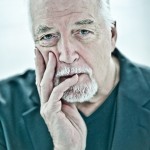
Jon Lord. Picture taken from his official web site.
One of the modern musicians I most admired and listened to. He made me vibrate and I was fortunate enough to see him play a couple of times in Madrid. Today, 16th July 2012, Jon Lord sadly passed away. My sincere condolences to his family and friends. I’ll always remember you Jon!
Today we have Carmen Cayuela, who will talk about profitable emotional investments. If you did not have the chance to watch the previous article and video on IE Coaching: Emotional Needs, please click HERE.
Carmen is a Coach PCC (ICF accredited) and has a background as Economist and Specialist in Emotional Intelligence. She works on the development of the critical thinking we need for our freedom of choice, as a Personal & Executive Coach and as a Mentor & Examiner for Coaches. She coaches people through the IECoaching® methodology so that they can learn how to pay attention to their emotional needs respecting the needs of the others, too. This way, the coach becomes an Emotional Mediator who “accompanies” his clients in their dialogs with themselves and with the others.
On the following video you can learn about the 4 kinds of investments and the “Profitable Emotional Investments”:
Carmen will be speaking on 14th July 2012 at Ateneo de Madrid for the Coachtulia entitled: “Profitable Emotional Investments”.
This is a monthly column on becoming a great human being and has two opinions on the subject from eastern and western parts of the world namely Dr Amit Nagpal from India and Michael Thallium from Spain. If you wish to read more articles on this topic, please visit The Joys of Teaching by Dr Amit Nagpal.
Dr Amit Nagpal is a Personal Branding Consultant & Global Success Coach. He is based in New Delhi, India and specializes in personal branding with a holistic touch. His philosophy is, "Enlarge as a Human Being, Excel as a Social Media Being and Evolve into a Personal Brand(ed) Being.
There is a proverb in Chinese, “A wise man adapts him to circumstances as water shapes itself to the vessel that contains it.” Increasing globalised environment requires us to be more and more adaptable. The human race survives and adapts itself to locations with subzero cold temperatures and above 50 degrees Celsius heat. We are gifted with adaptability though it requires time and some effort to adapt oneself to different temperatures, cultures, mindsets and lifestyles.
The origin of the word ‘adaptability’ is from latin word adapto which means fit or matching. According to Andresen and Gronau adaptability is an ability to change something or oneself to fit to occurring changes.
Barriers to adaptability
Different types of mental blocks like preference, stereotyping, ethnocentrism, bigotry and isms create obstacles in open-mindedness which is required for adaptability. P.S. Perkins has suggested a spectrum of prejudice.
Preference is a personal prejudice and also a matter of private choice which every individual deserves to make. Example preference of wheat over rice in northern India.
Stereotyping is a tendency to generalise behaviour of a particular age group, gender, race or class of people without any evidence. E.g. all Americans are aggressive.
Ethnocentrism is the belief that, ‘My culture is better than others.’ Example people of X country believe that they are the most superior race in the world.
Bigotry is extreme ethnocentrism exercised during comparison of one group with others.
Isms are the resultant actions for oppressing other people /groups due to the differences example sexism, ageism etc
The less prejudice a person has the more open minded he can be and will find it easy to adapt to any place, culture, age group, class and so on.
How to become more adaptable?
Dane E. Smalley says, “The survival of the fittest is the ageless law of nature, but the fittest are rarely the strong. The fittest are those endowed with the qualifications for adaptation, the ability to accept the inevitable and conform to the unavoidable, to harmonize the existing or changing conditions.”
To increase your adaptability, interact with people of diverse cultures and educational background. Whenever you travel to a new place, try local food, learn few sentences of local language and try to mix with local people. Learn about the cultural differences (with your culture) and customs / traditions. Even Mahatma Gandhi emphasized that adaptability is the power of resistance and assimilation.
The more you adapt to the local culture, the more you will be accepted (the less alien you will feel). The more effort you take to adapt, the closer you will get to the native people’s hearts.
“Yes we are all different. Different customs, different foods, different mannerisms, different languages but not so different that we cannot get along with one another. If we will disagree without being disagreeable.” – Martin Kohe
Michael Thallium is a global and greatness coach based in Spain. Michael has spent many years of his life traveling around many countries and continents, sailing the seas, flying the skies all over the world. Since 2008 he is dedicated to his passions namely coaching, language & communication and music.
When I look back I see that adaptability has been a constant feature in my life, especially in the last 20 years. As they say, “There is nothing as constant as change”, but I would also add that if “change” is constant, adaptability is balancing and leads you to greatness.
In my case, one of the things that most contributed to increase my adaptability was learning languages, which in the end led me to “travelling”. I remember the first time I was abroad, back in 1991. I went to Hamburg in Germany, and that was one of the turning points in my life. The Berlin Wall, at least the physical barrier, was no longer there. I remember that, when I arrived in Hamburg, I expected to meet tall, blond, blue-eyed German people, just the stereotype I had seen in the movies, part of a cultural heritage of the first half of the 20th century. Far from reality! Hamburg was a cosmopolitan city and I found more short, dark-haired and dark-eyed people than I could have ever expected.
A few lines before, I said that learning languages contributed to increase my adaptability and that’s very true. As a translator or interpreter, you adapt the meaning of a message from one language to another and, ideally, you want to convey the spirit of the speaker’s message to the listener or receiver. Believe me, you have to adapt yourself to the speaker’s and listener’s needs. Otherwise, the communication will be poor!
Due to my different jobs, there were times in my life when I had to change residency and even change countries quite often. Working as a tourist entertainer in hotel resorts I learnt one of the first lessons on adaptability. Most of guests used to stay in the resorts for a week or two, so that every two weeks I had to deal with completely different people and adapt myself to a very different reality. What lesson did I learn first? I learnt how to remain myself under changing environments and circumstances.
Working for cruiseliners was also a great opportunity for me to boost my adaptability. I had to change, let’s say, higher rank positions for lower rank positions and start again from the scratch a number of times. I worked with people from all over the world -some of the working teams had more than 50 nationalities- and that was also my first close contact with people from different countries in Asia: India, Pakistan, Indonesia, Philippines, China, Myanmar, Thailand… On my way up to different working positions, I had to adapt myself to the many different ways people see the world: different religions, languages, culture, food… Pretty interesting! Second lesson on adaptability learnt: you are able to adapt yourself to those many different realities if you remain authentic and get rid of bigotry.
Coaching is another example of adaptability. As a coach, you adapt yourself to your client’s agenda and learn how to remain as neutral, and non-judgemental, as you can be. During coaching you learn a lot about human beings as well as about yourself. Third lesson on adaptability learnt: to achieve goals everybody follows his/her own path and beat. As a coach, you’ve got to adapt to that beat.
And last but not least, music which, of course, plays an important role in my life. From all the different styles of music from all over the world, I have learnt my fourth lesson on adaptability. If you want to know what music is, do not just take a bunch of sounds from it and start listening to them. Music is not just sounds, (though when you take the sounds out of the music, you lose the essential quality of music): music also includes its rhythm, its pitch, its timbre and its flow through time. Also, if you want to know yourself -and this is the crucial lesson-, pay attention to your rhythm, your pitch, your timbre and to the flow of your being through time.
Your greatness requires a holistic approach for sure!
Neuroscientist Daniel Levitin in his fantastic book – which I recommend- This is your Brain on Music, tells the story of how John R. Pierce -in his 80s at that time- asked him to select six songs which would represent the whole rock. Pierce had already listened to Elvis Presley, so Levitin omitted Elvis on his list. Here you are those six songs. Any comments?
1. Long Tall Sally, Little Richard
2. Roll Over Beethoven, Beatles
3. All Along the Watchtower, Jimi Hendrix
4. Wonderful Tonight, Eric Clapton
5. Little Red Corvette, Prince
6. Anarchy in the UK, Six Pistols
Apparently John R. Pierce was not familiar with rock n’ roll and he asked Daniel Levitin to play six songs for him, six songs which would convey all what is “important” to know about rock. The interesting thing is that Pierce was an expert in psycoacoustics and when he listened to those songs, he said that what he really liked was the timbre of rock. He was not so interested in the songs and rythms. It was the timbre what defined rock… at least for Pierce.
I think that the study of our brain can give us lots of clues on how to change our lives, so that we can feel better with ourselves or, in other words, so that we can live “integrated”.
Particularly, I consider that knowing our brain better opens new ways in the coaching processes and in the field of personal development.
Today I have discovered this video and I would like to share it with you all:
This is a monthly column on becoming a great human being and has two opinions on the subject from eastern and western parts of the world namely Dr Amit Nagpal from India and Michael Thallium from Spain. If you wish to read more articles on this topic, please visit The Joys of Teaching by Dr Amit Nagpal.
Dr Amit Nagpal is a Personal Branding Consultant & Global Success Coach. He is based in New Delhi, India and specializes in personal branding with a holistic touch. His philosophy is, "Enlarge as a Human Being, Excel as a Social Media Being and Evolve into a Personal Brand(ed) Being.
The world became a global village many decades back but social media has increased the speed of globalization tremendously, as individuals are developing friends across the world using Facebook, Linkedin and other platforms at an amazing speed. If politicians could never solve the enmity between nations like India and Pakistan, the increased interactions between people through social media and other technologies is going to really help in building the bridges. The first tough bridges will be built by Transleaders. Jennifer Sertl, a thoughtleader in corporate consciousness and a proponent of Transleadership says, “What the world needs now is beyond leadership, what is required is Transleadership.”
So what are Transleaders? Transleaders are basically conscious leaders who are deeply conscious of what they are doing and why. Other traits that Transleaders have include deep awareness of environment, strong intuition, ability to inspire trust, non-judgmental attitude, encouraging especially of proactive innovation, revolutionary thinking, devilish persistence, openness to constructive conflict, effective listening, high energy, curiosity and the ability to energize others.
Since a Transleader has deep respect for people, she automatically develops a global mindset, a respect for diversity and sensitivity to cultural differences. The organisations may spend cores of rupees in training their managers to develop global mindsets but training cannot remove deep rooted prejudices, sometimes hatred for other cultures and religions. A true global mindset requires the respect for humanity irrespective of caste, colour, religion, gender, country, and region and so on. And such respect can only come from a person at a higher level of consciousness.
Transleadership is very similar to spiritual leadership or to become a Transleader, one needs to first develop a tendency of looking within and being the change you want to see in the world.
In a way, a Transleader is a leader who has tapped her and her team’s peak potential. Once the team puts in its best, the products and services created by such an organization are bound to be best. A great human being trusts others and inspires trust in others and a Transleader always focuses on this sometimes at the cost of short term benefits.
So, how does one become a Transleader? Though Jennifer says, Agility = Resilience, Responsiveness and Reflection, I personally believe reflection is the starting point. The process of deep reflection and contemplation clears the clutter in the mind and brings out the best inside us, the greatness inside us. Louise Smith says, “Your intuition knows what to do. The trick is getting your head to shut up so you can hear.”
Jennifer believes Transleaders are both born and made. She says, “For some people, it is a reflection of their natural temperament, personality and character. For others, it is an acquired skill set, taught by life and work experience, by trial and error, learning from their mistakes. For still others, we believe, it is the result of long reflection and self-examination.”
I believe, it takes time, attitudinal shift and deep reflection (contemplative practices) to make your head shut up and clear the dust which is there on our minds. My friend Raja says it perfectly, “I have an enlightened soul covered with a foolish mind.”
So let us shake off the foolishness and we are great Transleaders already?
Michael Thallium is a global and greatness coach based in Spain. Michael has spent many years of his life traveling around many countries and continents, sailing the seas, flying the skies all over the world. Since 2008 he is dedicated to his passions namely coaching, language & communication and music.
If I want to write on transleadership, I can’t help mentioning Jennifer Sertl and Koby Huberman, co-authors of “Strategy, Leaership & The Soul”, the book where I first learnt about the concept of transleadership. Almost a year ago, in “Jennifer Sertl & The Transleadership” I explained how I got to know about Jennifer and back then I said she was an example of what a Transleader is. But what is a Transleader? In words of Jennifer and Koby: “He or she is currently -or prospectively- the CEO of a small-to-medium-sized business or the head of an organization of similar size, the person who has the primary responsibility for its survival, its success and its growth.”
We are talking about a new kind of CEOs, those who look at themselves, their companies and their people in an new way, “a way that is consonant with society and the marketplace as it is today” (responsibility), not as it was when they got their MBA or their first office on the executive floor. The Transleaders are more resilient, responsive and reflective. They create learning experiences and leverage failures and breakdowns (resilience), they “hold multiple realities together as they flex their style and mental models to the needs and concerns of their particular audience, and are much more likely to consider customers’ and employees’ insights as valuable as their shareholders’ (responsiveness)”, they design in “quiet reflective” time for themselves and their teams in order to get perspective (reflection).
So, in a way, these monthly columns that Amit and I write on how to become a great human being -and that you are reading right now- would not have been possible without Jennifer Sertl’s Transleadership. In the end, Transleadership is a call to consciousness, to personal responsibility, to harmonize your organization, to elevate your people, it’s a call to know your soul and the soul of your organization, a call to embrace diversity and to use your energy wisely, it’s a call to make flexibility and adaptability a core competence, a call to share power in order to multiply organizational strength.
So, when are you going to embrace this call to consider your possibilities unlimited?

 Today we have Carmen Cayuela, who will talk about profitable emotional investments. If you did not have the chance to watch the previous article and video on IE Coaching: Emotional Needs, please click