Sorry, this entry is only available in Español.
|
This is a monthly column on becoming a great human being and has two opinions on the subject from eastern and western parts of the world namely Dr Amit Nagpal from India and Michael Thallium from Spain. If you wish to read more articles on this topic, please visit The Joys of Teaching by Dr Amit Nagpal.
A HEALTHY BODY MAKES US GREAT
 Dr Amit Nagpal is a Personal Branding Consultant & Global Success Coach. He is based in New Delhi, India and specializes in personal branding with a holistic touch. His philosophy is, "Enlarge as a Human Being, Excel as a Social Media Being and Evolve into a Personal Brand(ed) Being. A Healthy body makes us great. Does it? Well! I think so. Let us go through the post and see if you agree. We will focus on two issues, why there is a need to be healthy and how can you stay healthy.
Eat Healthy
Listen to your Body’s Needs Treat it with Dignity and Love All is well. There is no need to hurry. Start taking baby steps. Just remember to breathe consciously, the Universe will take care and support you for the rest. By the way, do you agree a healthy body makes us great? Do let us know through your comments.
A HEALTHY BODY MAKES US GREAT
 Michael Thallium is a global and greatness coach based in Spain. Michael has spent many years of his life traveling around many countries and continents, sailing the seas, flying the skies all over the world. Since 2008 he is dedicated to his passions namely coaching, language & communication and music. I must admit I had to pick a fight with myself to overcome some resistance to write this article. I have been struggling with my weight for a number of years already. And although I achieved some results in the past when I took care of what I eat and when I did some physical exercise, I’m still not happy with it. Sometimes I have people saying to me (not only about this topic, but many others): “Come on, you’re a coach!” And that implicitly means “Hey, you are not allowed to make any mistakes!” Well, ladies and gentlemen, yes, coaches make mistakes too, and in my case a lot! And this doesn’t prevent me from stating that a healthy body makes us great!
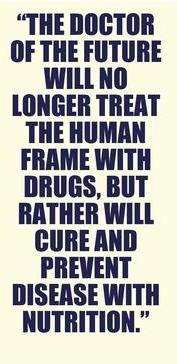
I’m not going to talk about a healthy body just from the aesthic point of view. As the Latin adagio goes Nulla aethica sine aesthetica; nulla aesthetica sine aethica (No aethics without aesthetics; no aesthetic without aethics). That leads me to a holistic approach. When I say “healthy body” I mean the body of an “integrative” person, a person who integrates his four main intelligences: body (physical), mind (intelectual), heart (emotional) and spirit (spiritual). That means that in order to have a healthy body we have to work on those four areas, not only the physical. However, I would like to focus on just one issue today: nutrition. And I must apologise to all those people in the world who have little or even nothing to eat. If you are one of them and you ever happen to read this article, I apologise if you consider it a bit frivolous to speak about a kind of nutrition which concerns more to the developed world, those countries (a minority in the world) where there is wealth in comparison to the majority of regions in the world which are poorer. If you think about it, eating is one of the most “intimate” relationships we have everyday. We are not aware that every time we eat, we are taking something from outside (external) and putting it in our bodies. Food transforms and becomes part of ourselves. At this very moment, we are relating to the rest of the world. We just think of food, but it’s not just food. In the wealthy countries there is a number of economic-wealth related diseases which could be prevented and even stopped dead if we would pay more attention to what we eat: obesity, coronary artery diseases, cancer… I don’t know if you ever heard of The China Study, but I recommend you to read what Dr T. Colin Campbell has to say about nutrition and economic wealth related diseases. It all started in India back in 1968 when two researches, T. V. Madhavan and C. Gopalan, found that the aflatoxin (a carcinogenic substance) in combination with 20% of animal protein in the diet of a group of lab rats would lead to the development of liver cancer whereas another group of rats eating just 5% of animal protein wouldn’t develop that disease. There was no doubt: nutrition was related to cancer. However, this research did not seem to be taken into account in the “wealthy” countries. Years later, Dr T. Colin Campbell, who did take that research into account, came to the same conclusion in humans. His project, known as the China Study, produced more than 8,000 statistically significant associations between various dietary factors and disease. To make it short: “People who ate the most animal-based foods got the most chronic disease… People who ate the most plant-based foods were the healthiest and tended to avoid chronic disease.” In the “wealthy” countries we tend to use drugs to solve any health problem. And we don’t realise that just by changing some eating habits and becoming more aware of the foods we put in our bodies, we would save money and be healthier. Have you ever heard of Dr Caldwell Esselstyn? He has done more to cure coronary artery diseases than any other physician. He used to be a surgeon, but one day he decided to try a less aggressive way to prevent and reverse disease by using nutrition and avoiding surgery. His results were simply incredible! He achieved what no surgery had ever achieved! Again, his diet was plant-based. I’m not a vegetarian, neither a vegan. I don’t eat much animal protein and, specially after researching a bit on this topic, I try to avoid animal protein. I’m not telling that you should become a vegetarian, although I recommend you to read about that China Study and see the benefits for yourself of a better nutrition. Enough data and facts are out there to come to your own conclusions. One thing seems to stand out: a plant-based diet is much healthier. So, when possible, I avoid eating “any thing which has a face and teeth”. If you don’t like reading books or studies, because you find it boring, then you can watch a documentary called Planeat: “Nothing changes the planet as much as the way we eat.” Here you are a trailer of the documentary: Regardless where you are in the world now, either in a wealthy region or a poor region, I would just be happy if reading this article has helped you question some of your food habits and become an even greater person. Remember: a healthy body will make you great! Think about it when you put that next morsel in your mouth. Just a week ago, I was in Kiev, Ukraine, and before I went to bed, I put on the TV and watched the news summary of the London Paralympic Games 2012. Then I saw the victory ceremony of the women’s 100m breaststroke swimming competition. Immediatly I got captivated by the person who had wone the gold medal. In that moment, I couldn’t understand who she was neither what her name was, because my level of Russian is very poor -although I’m learning it-, not to speak about my even poorer level of Ukrainian. So, I couldn’t tell if the language they were speaking was either Russian or Ukrainian. However, I said to myself that I would find out the name of the winner once I would come back to Madrid, Spain. And that is what I did. The winner was Viktoriia Savtsova. She is 14 years old and suffers from brain paralysis. When I saw her on TV I immediately knew that she was an inspiring example of greatness -that greatness I like to talk about during the coaching process-, an example of how to overcome obstacles, and she captivated me. Here you are the videos of that exciting final and of the victory ceremony. And Viktoriia Savtsova, because of greatness, deserved the victory. VIDEO OF THE EXCITING FINAL
VIDEO OF THE VICTORY CEREMONY Michael Thallium (Article by Jennifer Sertl, originally published in TeacherCast. To see the article on TeacherCast, please click on Teachers Are Artists) 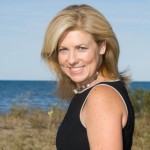 Jennifer Sertl I was doing a leadership exercise recently and asked the team I was working with to share a someone who made the most impact on them and why. Almost without exception a teacher was named. I can remember my 9th grade teacher Ms. Neal from Cedar Shoals High School in Athens, Georgia. She told me I was a humanitarian. I didn’t know what that meant at the time. Now I am trying to be that person she saw so long ago. I think people over-estimate leadership and under-estimate the power of modeling. When we are forming our beliefs and habits we spend more time with our teachers than we actually do our family and parents. We need to value and appreciate our teachers more for how they shape and mold us. It might be nice to send a letter of acknowledgment to a teacher who challenged, inspired, or mentored you.
 Picture taken from TeacherCast Teachers Are ArtistsThe art they practice is awareness. The canvas they use is the curriculum upon which they bring forth an effervescent picture for the world. The students arrive at the canvas, each bringing a unique and vibrant color. The artist’s strokes are the skillful, gentle questions that she asks her students. Some strokes are broad, confirming understanding. Some strokes are playful, discovering student’s current knowledge to find a benchmark to begin the lesson. Other strokes are so delicate that they barely touch the canvas. These strokes are the questions that stretch the student’s imagination and foster sensitivity. Bloom’s taxonomy provides hue to the masterpiece. The artist adds perspective to the painting by facilitating meaningful discussions and sharing observations. Once all the color has made its mark on the canvas and the painter has cultivated a glorious picture of a “spot in time,” with bittersweet emotion the artist gently places the work of art on the wall of life. It is now time to stretch and prepare yet another canvas. This is a monthly column on becoming a great human being and has two opinions on the subject from eastern and western parts of the world namely Dr Amit Nagpal from India and Michael Thallium from Spain. If you wish to read more articles on this topic, please visit The Joys of Teaching by Dr Amit Nagpal. TRUST MAKES US GREAT
Dr Amit Nagpal is a Personal Branding Consultant & Global Success Coach. He is based in New Delhi, India and specializes in personal branding with a holistic touch. His philosophy is, "Enlarge as a Human Being, Excel as a Social Media Being and Evolve into a Personal Brand(ed) Being. Why do some people inspire trust and some do not? How do we decide a person is trustworthy or not? Does perception play a major role or the competencies/character of the person? I will share my experiences and views. I decide whether the person is worth trusting based on the following factors viz.
Vibrations and body language – I have a strong sense of vibrations and get turned off by ultrasmart and snobbish behavior. It is easier to tell lies with the verbal language but body language can reveal many truths. Sometimes it may reveal nervousness, shyness and so on which may not be negative traits as such but may create problems in certain professions.
Track Record – A person’s track record can be judged based on past behavior or the documents (experience certificates, awards, recommendations and so on). The track record must be matched with our requirements. We may be looking for a very loyal friend (with long term commitment) or employee for example. Once bitten, twice shy-someone who has ditched us in the past may be difficult to trust. A client asked me once, “If somebody assures that I have improved, should I forgive and move on, inspite of the bad experience in the past?” My reply was, “Do not trust such a person with an important assignment immediately.” Trust should develop slowly and more crucial the task to be entrusted with, the more trustworthy the person has to be.
Required competencies – The knowledge, skills and attitudes required for a specific task are of course critical to inspire trust. The assesment of the same can be done formally or informally depending upon the situation.
Attitude assessment – Who inspires trust to me is also a matter of my personal preferences. A selfish person may be professionally competent but I find it easier to work with collaborative (give and take) rather than selfish people. Positive and ethical people inspire more trust and I like to engage in a conversation to find out how genuinely positive and ethical a person is. I have conducted stress interviews and think on the feet exercises for years and that helps me in judging people quickly. With experience also, we tend to develop a sense of catching lies.
I am reminded of contingency theory of management, which says that each situation is unique and hence there is no standard formula for a managerial situation. These guidelines are very broad and therefore whether to trust, how much to trust, whcih tasks to trust (with) and when not to trust can only be decided based on the situation.
A smart and trustful person will be liked and respected more than an innocent and distrustful person. But to trust or not to- is an eternal question.
TRUST MAKES US GREAT
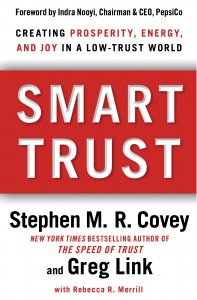
Michael Thallium is a global and greatness coach based in Spain. Michael has spent many years of his life traveling around many countries and continents, sailing the seas, flying the skies all over the world. Since 2008 he is dedicated to his passions namely coaching, language & communication and music. I have no doubts that trust makes us great. In an environment where trust is high, you can do things faster and at a lower cost. We all can learn to trust not just to do things faster and at a lower cost, but to create joy, prosperity and to feel energized. The ability to learn is itself very learnable, specially at a young age. That is why it is essential to help young people to be smarter and trust. However, we all can learn how to trust regardless of our age. And believe me, it is not that hard but it isn’t easy either! It requires time, effort and commitment. Of course, the first person you have to start with is yourself: “Do you trust yourself?” and “Who trusts you?” Now you may be wondering, “but how can you trust in a low-trust world?” To answer this question I would like to recommend two excellent books: “The Speed of Trust” and “Smart Trust” by Stephen M. R. Covey and Greg Link. They identified 13 key behaviours which high trust people have in common. The first five behaviors are character-based; the second five are competence-based; and the last three are equal parts character and competence.
(If you wish to know a little bit more about these behaviors, please read The 13 Behaviors Of A High Trust Leader)
Maybe some people think this is just rhetorical or moralizing mambo-jambo. But it’s not! I am not talking about trusting everything and everyone you come across with. That would be a kind of “blind trust”, which is not good either. I am talking about a smart trust. And the first action you can take is choosing to believe in trust. This doesn’t depend on anybody else but you. Beliefs drive our behaviour and our actions. What you believe is more important than what you know. Do you believe you are worthy of trust? Do you believe people can be trusted? Do you believe that extending trust is a better way to live?
I already said that the first person you have to start with is you. To what extent are you giving yourself and people a person they can trust? What can you improve in relation to your character and competence so that people will extend trust to you?
Another action you can take to achieve that smart trust I mentioned before is to declare your intent and assume positive intent in others. Make yours this motto: “You are positive intended unless proven otherwise”. Do what you say you are going to do. When we don’t do what we said we were going to do, then we generate mistrust… And if you want to “regain” that trust, you’ll have to right the wrong.
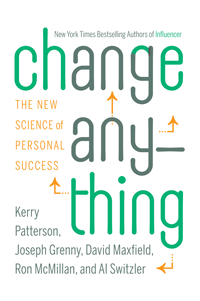
Be the first one to lead out in extending trust to others. If you want to be a high trust person, take the lead! You will have self doubts. We all have! But if you take the lead to extend trust to yourself and others, then you will contribute to create a greater world. Extending trust is a continous journey. Ask yourself this question: How is someone’s life better because they’ve crossed in my path? Trust yourself and you will find some answers and, most important, you will become a greater person! If you wish to read the original article, please visit the blog Change Anything
Article written by JOSEPH GRENNY
We have much less control over our behavior than we think.
Last month I was in an all-day meeting in San Francisco with a pretty sophisticated group of international business experts. As the morning wore on, our host brought out treats. I quickly learned that sophistication does not dull one’s response to M&Ms. As bowls of the brightly colored candy-coated chocolates were distributed around the room, these hot-shot financiers and venture capitalists perked up, wiggled with glee and leaned forward to retrieve a handful of happiness. When the host reached the couch on which I sat with another man, I heard him mutter, “Oh no, here goes my diet.” I turned to him and said, “Want some help?” He looked at me despairingly and said, “Yes!” I leaned forward, picked up my note pad, and placed it over the M&M bowl that sat on the coffee table in front, offering its bounty like a candy shop window. The effect on my friend was immediate. It was as though the candy store proprietor pulled a window blind. My friend relaxed. His breathing became more regular. And in spite of the fact that the M&Ms were no further from him than they had been seconds earlier, he endured the remaining hours of our meeting without even once succumbing to the bowl’s siren call. Perhaps we don’t have as much free will as we think we do. But that doesn’t mean we can’t take an active role in shaping our own behavior. The journalist Michael Shermer suggests that the way to do so is by exercising our “free won’t.” While the impulses to act a certain way are inevitably tied to the various sources of influence that happen to us, we can choose not only to not respond to them, but to blunt or change them. The neuroscientist Marcel Brass repeated Libet’s experiment, but added a twist. He gave subjects the opportunity to veto a decision to push a button at the last minute. Brass found that there is a particular part of the brain called the left dorsal frontomedian that gets all fired up during efforts to inhibit actions. In other words, this seems to be where our “free won’t” muscles live. Let’s call it the “cover the M&M bowl” part of the brain. I think Shermer is right to refocus our attention on “free won’t” rather than “free will.” My colleagues and I have come to the same conclusion. The vast evidence of the social sciences of the past decades suggests that human beings have remarkably little control over their own behavior. We are incredibly easy to manipulate. We spend, eat, talk, vote, work and play in ways that are profoundly shaped by forces we grossly underestimate. But it doesn’t have to be this way. If we start accepting how little free will we have, we can refocus our attention on our free won’t–by reshaping the sources of influence that shape us. In the end, we’re back in control, but just a little less directly.
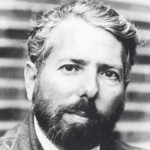 Stanley Milgram 1933-1984 At the beginning of the 60s, Stanley Milgram carried out a very interesting experiment at Yale University… But very few people liked the results. Stanley Milgram coined the term “agentic state” meaning the state in which a person puts up with what she is doing against her own personal values. After that experiment, Stanley Milgram spent the rest of his life searching for the positive deviance in human behavior. Now, 50 years later, a similar experiment has been carried out in France. And the results have been astonishing: the percentage of people willing to inflict punishment on a victim is even higher than the one found by Milgram. Here a proof of the power of television and manipulation of human behavior. What if we concentrate on more positive deviance and personal values? Michael Thallium
Perhaps a more important question than, “Who do you trust?” is the far more personal question of, “Who trusts you?” There are some organizations who ask all their employees directly the following simple, key question in formal 360º feedback processes: “Do you trust your boss?” These companies have learned that the answer to this question is more predictive of team and organizational success than perhaps any other question they might ask. A High Trust Leader is an individual who has unquestionably strong personal credibility, has the ability to create and grow trust with others interpersonally, and who is then able to extend that trust organizationally. High Trust Leaders are managers of choice who understand the impact trust always plays on two key outcomes—speed and cost—and how low or high trust either extracts a tax or produces a dividend on every activity and dimension within a relationship, team, or organization. High Trust Leaders have learned how to interact with others in ways that increase trust levels while avoiding the pitfalls that deplete trust. While there are numerous actions and behaviors that affect trust accounts, we have identified the 13 key behaviors that High Trust Leaders have in common (the first five behaviors are primarily character-based; the second five are primarily competence based; the last three are equal parts character and competence). As you go through these behaviors, you may also find it valuable to consider the opposite of these 13 behaviors and how such “withdrawals” deplete trust. What’s most exciting is that these 13 Behaviors of High Trust Leaders can be learned and applied by any influencer at any level within any organization. The net result will be a significantly increased ability to generate trust with all stakeholders in order to achieve better results. The 13 Behaviors of High Trust Leaders are as follows: CHARACTER BEHAVIORS1. Talk StraightBe honest. Tell the truth. Let people know where you stand. Use simple language. Call things what they are. Demonstrate integrity. Don’t manipulate people nor distort facts. Don’t spin the truth. Don’t leave false impressions.
2. Demonstrate ConcernGenuinely care for others. Show you care. Respect the dignity of every person and every role. Treat everyone with respect, especially those who can’t do anything for you. Show kindness in the little things. Don’t fake caring. Don’t attempt to be “efficient” with people.
3. Create TransparencyTell the truth in a way people can verify. Get real and genuine. Be open and authentic. Err on the side of disclosure. Operate on the premise of, “What you see is what you get.” Don’t have hidden agendas. Don’t hide information.
4. Right WrongsMake things right when you’re wrong. Apologize quickly. Make restitution where possible. Practice “service recoveries.” Demonstrate personal humil- ity. Don’t cover things up. Don’t let personal pride get in the way of doing the right thing.
5. Show LoyaltyGive credit to others. Speak about people as if they were present. Represent others who aren’t there to speak for themselves. Don’t badmouth others behind their backs. Don’t disclose others’ private information.
COMPETENCE BEHAVIORS6. Deliver ResultsEstablish a track record of results. Get the right things done. Make things happen. Accomplish what you’re hired to do. Be on time and within budget. Don’t overpromise and underdeliver. Don’t make excuses for not delivering.
7. Get BetterContinuously improve. Increase your capabilities. Be a constant learner. Develop feedback systems – both formal and informal. Act upon the feedback you receive. Thank people for feedback. Don’t consider yourself above feedback. Don’t assume your knowledge and skills will be sufficient for tomorrow’s challenges.
8. Confront RealityTake issues head on, even the “undiscussables.” Address the tough stuff directly. Acknowledge the unsaid. Lead out courageously in conversation. Don’t skirt the real issues. Don’t bury your head in the sand. Confront the reality, not the person.
9. Clarify ExpectationsDisclose and reveal expectations. Discuss them. Validate them. Renegotiate them if needed and possible. Don’t violate expectations. Don’t assume that expectations are clear or shared.
10. Practice AccountabilityHold yourself accountable. Hold others accountable. Take responsibility for results. Be clear on how you’ll communicate how you’re doing – and how others are doing. Don’t avoid or shirk responsibility. Don’t blame others or point fingers when things go wrong.
CHARACTER AND COMPETENCE BEHAVIORS11. Listen FirstListen before you speak. Understand. Diagnose. Listen with your ears… and your eyes and heart. Find out what the most important behaviors are to the people you’re working with. Don’t assume you know what matters most to others. Don’t presume you have all the answers – or all the questions.
12. Keep CommitmentsSay what you’re going to do. Then do what you say you’re going to do. Make commitments carefully and keep them at all costs. Keep commitments the symbol of your honor. Don’t break confidences. Don’t attempt to “PR” your way out of a commitment you’ve broken.
13. Extend TrustDemonstrate a propensity to trust. Extend trust abundantly to those who have earned your trust. Extend trust conditionally to those who are earning your trust. Learn how to appropriately extend trust to others based on the situation, risk, and credibility of the people involved. Don’t withhold trust because there is risk involved.
Stephen M. R. Covey © 2004, 2008 CoveyLink | www.coveylink.com This is a monthly column on becoming a great human being and has two opinions on the subject from eastern and western parts of the world namely Dr Amit Nagpal from India and Michael Thallium from Spain. If you wish to read more articles on this topic, please visit The Joys of Teaching by Dr Amit Nagpal. THE INNER JOY MAKES US GREAT
|
|
|
|
Copyright © 2026 Michael Thallium - All Rights Reserved |
||
 Exercise
 The psychologist
  What separates the great leaders from the good ones? What makes a manager a manager of choice by her reports, peers, and boss? What makes an individual credible with customers, suppliers, distributors, investors, and other stakeholders? While there are many dimensions to these questions, there is one common thread throughout: being an individual who can be trusted.