This is the interview no. 8 of the series “Music connects People” on Music Without Quarantine. The seven previous interviews were with the Spanish harpsichordist Diego Ares, with the American bass & lutenist Joel Frederiksen, with the German cellist Benedict Klöckner, with the Peruvian pianist & bandoneonist Claudio Constantini, with the sisters and pianists Danae & Kiveli Doerken, with the Ukrainian and great pianist Anna Fedorova and with the Mexican composer based in BostonJosé Elizondo. Now it’s the turn of a great violist, one of her kind:Dana Zemtsov. Dana was born to a family of musicians of Russian origin in which viola plays a very important role. Dana, however, was born in Mexico. She has travelled and played music in many countries. Multilingual and a woman of great artistic talent (not only musical), for those of you who don’t know her yet, this interview is the perfect starting point to do so. Dana has played with different internationally renowned artists and also is committed to the dissemination of chamber music by Mexican composers. In June 2020 an album with the pianist Anna Fedorova on Channel Classics is to be released. I strongly recommend it: Silhouettes, music of French composers for viola and piano. Here you are the interview. Enjoy it!:
This is the interview no. 7 of the series “Music connects People” on Music Without Quarantine. The six previous interviews were with the Spanish harpsichordist Diego Ares, with the American bass & lutenist Joel Frederiksen, with the German cellist Benedict Klöckner, with the Peruvian pianist & bandoneonist Claudio Constantini, with the sisters and pianists Danae & Kiveli Doerken and with the Ukrainian and great pianist Anna Fedorova. On this occasion I had the opportunity to talk to the Mexican composer based in BostonJosé Elizondo. The story behind this interview is quite interesting. I hadn’t heard of José until a some weeks ago. He was part of the audience who follow us on Facebook every Wednesday in our online concerts. Meeting him online is the very proof that music connects people. Apart from working as an engineer specialized in artificial intelligence and voice recognition, José happened to be a composer as well. To make the story short, one of the musician participating in Music Without Quarantine, the cellist Benedict Klöckner, ended up playing Jose Elizondo’s work “The Dawn of Hope”. Here you are the interview. I hope you enjoy it as much as I did when we recorded it:
This is the interview no. 6 of the series “Music connects People” on Music Without Quarantine. The four previous interviews were with the Spanish harpsichordist Diego Ares, with the American bass & lutenist Joel Frederiksen, with the German cellist Benedict Klöckner, with the Peruvian pianist & bandoneonist Claudio Constantini and with the sisters and pianists Danae & Kiveli Doerken. This time, our guest is the great pianist Anna Fedorova whom I met back in 2012 at the Chamber Music Session in Kiev, Ukraine. Anna is a very generous artist and person. She is the very example that behind a great artist there is also a great person. In my opinion, that makes her even a greater artist. This interview is very special to me, because we have not seen each other for eight years. The confinement has helped us connect again via Internet. Many things have happened in Anna’s life ever since. The interview is divided into two parts: one has to do more with her musical background (part I) and the other one (part II) has to do with her career and also with her personal life with her husband, the counterbassist of the Concertgebouw Orchestra Nicky Schwartz. In Anna Fedorova converge the best of both piano schools of Russia and the Western countries. Among her teachers and professors are Boris Fedorov, Leonid Margarius, Norma Fisher, Steven Isserlis, András Schiff, Menahem Pressler… Her recordings of the works by Sergei Rachmaninoff on Channel Classics are fabulous and I recommend any of the albums she has recorded either solo or along other great musicians such as the cellist Benedict Klöckner or the violist Dana Zemtsov, who also have participated in Music Without Quarantine:
This is the 5th interview of the series “Music connects People” on Music Without Quarantine. The four previous interviews of the series were with the Spanish harpsichordist Diego Ares, the American bass singer & lutenist Joel Frederiksen, the German cellist Benedict Klöckner and the Peruvian pianist & bandoneonist Claudio Constantini. This time the guests to be interviewed are the German sisters and pianists Danae & Kiveli Doerken. Enjoy it!
This is the third interview of the series “Music connects People” for Music Without Quarantine. The three previous interviews of the series were with the Spanish harpsichordist Diego Ares, the American bass singer & lutenist Joel Frederiksen and the German cellist Benedict Klöckner. On this occasion, I am really happy to speak with the great Peruvian pianist and bandoneist Claudio Constantini. Born to a family of musicians (his father was the pianist Gerardo Constantini and his mother is the orchestra conductor Carlota Mestanza), Claudio plays the piano and the bandoneon with equal virtuosity. This Peruvian musician currently living in Spain has offered numerous concerts in many different countries. I am sure you will enjoy it:
This is the third interview of the series “Music connects People” for Music Without Quarantine. The two previous interviews of the series were with the Spanish harpsichordistDiego Ares and the American bass singer & lutenist Joel Frederiksen. On this occasion, I had the privilege to speak with the great German cellist Benedict Klöckner. Benedict is one of the musicians who participated in the project Music Without Quarantine from a very early stage. He is a very active musician on social media since the COVID-19 quarantine and confinement started in many countries in the world by March 2020. A generous artist, always smiling and open to discover new horizons in music as well as in life, Benedict has played with many different orchestras and collaborated with outstanding musicians such as the Ukrainian pianist Anna Fedorova. Both recorded a fantastic album with works for cello and piano by Chopin and Franck. For those of you who wish to know a bit more about the career and professional activity of Benedict, please take a look at his web page: http://www.benedictkloeckner.de.
It’s a short and nice interview. It only takes 11 minutes and you’ll learn about the anecdote why Benedict’s left hand is bigger than his right hand… Enjoy it!
This is the second interview of the series Music connects People of the project Music Without Quarantine. The first interview was dedicated to the Spanish harpsichordist Diego Ares. This time, the artist to be interviewed is the one in only Joel Frederiksen, a first rate specialist in early music, mainly from the Renaissance and Baroque. Not only has he a tremendous basso profondo voice, but he also plays the lute and theorbo. Born in Minnesota, he has been living in Munich, Germany, for many years already. Joel is the artistic director of the Ensemble Phoenix Munich. His recordings on Harmonia Mundi France and Deutsche Harmonia Mundi have won different awards. Joel studied a master’s degree in early music at the Oakland University, where he was distinguished with different awards: “Matilda Award”, “Distinguished Musicianship”and ”Distinguised Alumni Achievement Award”. Between 1990 and 1999, while Joel was living in New York, he was a member of the Waverly Consort and the Boston Camareta. For those of you who would like to take a look at his recordings, please visit: JOEL’S DISCOGRAPHY.
The following interview has, of course, a very interesting artistic value, but to me it is its personal value, above all, that makes the difference. Joel Frederiksen has participated in Music Without Quarantine offering various recitals where he discovered a new repertoire to many people who usually do not listen to classical music, not to mention early music. Yes, definitely music connects people. With his generosity, Joel showed he is not only an amazing artist, but a great person. And I want to thank him personally for his artistry and openness. It was a privilege to have him on Music Without Quarantine.
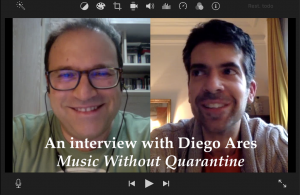
Who knows how year 2020 will remain in the memory of people! But one thing is sure, for many March and April 2020 will remain as the months of quarantine and confinement at home. In many countries around the world, these months were the “months of balconies”. However, March 2020 will go down in the personal history of some people as the month when Music Without Quarantine was born, a project with the aim to connect music and people, to connect great musicians with people who usually don’t listen to classical music. One of the artists who has participated in Music Without Quarantine is the Spanish harpsichordist Diego Ares, who has performed all around the world and currently lives in Basel, Switzerland. He is one of the first class harpsichordists in the world and, in April 2020, he was also the first one to break the ice in a series of interviews for Music Without Quarantine.
For those of you who would like to have a look at his recordings, please visit: RECORDINGS OF DIEGO ARES. However, there’s nothing like listening to the sound of a harpsichord or a clavichord live. So, if you ever have the chance, I encourage you to attend one of his recitals. And yes, if you’re lucky enough, do not hesitate and get closer, listen to him and eve talk to him after the recital. From the hands of Diego Ares spring up serene and beautiful melodies. More than an artist who knows his doctrine, he stands as a good man in the good sense of the phrase. I like to differentiate between performers, excellent performers and “the musician”, being the latter the one who really knows his art and knows how to explain it. Humble and a constant learner, Diego Ares is definitely an excellent performer, one of the best harpsichordists in the world, but, even more important, he is a musician, a MUSICUS, who honours every single letter of this word.

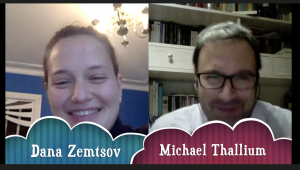 This is the interview no. 8 of the series “Music connects People” on Music Without Quarantine. The seven previous interviews were with the Spanish harpsichordist Diego Ares, with the American bass & lutenist Joel Frederiksen, with the German cellist Benedict Klöckner, with the Peruvian pianist & bandoneonist Claudio Constantini, with the sisters and pianists Danae & Kiveli Doerken, with the Ukrainian and great pianist Anna Fedorova and with the Mexican composer based in Boston José Elizondo. Now it’s the turn of a great violist, one of her kind: Dana Zemtsov. Dana was born to a family of musicians of Russian origin in which viola plays a very important role. Dana, however, was born in Mexico. She has travelled and played music in many countries. Multilingual and a woman of great artistic talent (not only musical), for those of you who don’t know her yet, this interview is the perfect starting point to do so. Dana has played with different internationally renowned artists and also is committed to the dissemination of chamber music by Mexican composers. In June 2020 an album with the pianist Anna Fedorova on Channel Classics is to be released. I strongly recommend it: Silhouettes, music of French composers for viola and piano. Here you are the interview. Enjoy it!:
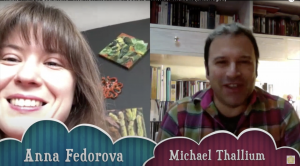 This is the interview no. 6 of the series “Music connects People” on
 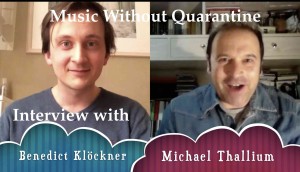 This is the third interview of the series “Music connects People” for
 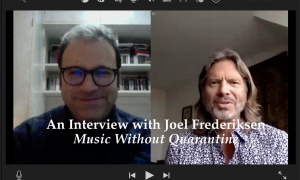 This is the second interview of the series Music connects People of the project
  Who knows how year 2020 will remain in the memory of people! But one thing is sure, for many March and April 2020 will remain as the months of quarantine and confinement at home. In many countries around the world, these months were the “months of balconies”. However, March 2020 will go down in the personal history of some people as the month when