Entradas recientes / Recent Entries
|
Two Opinions on Uncovering Our Greatness
This is a monthly column on uncovering our greatness, co-authored by Dr Amit Nagpal from India (who talks about a Westerner) and Michael Thallium from Spain (who talks about an Easterner). We aim to share the success stories of great human beings and wish to inspire the readers to uncover their greatness too.
—————–
Dr Amit Nagpal, India
http://www.dramitnagpal.com/my-profile/
Madam Curie – A Woman of Substance and More
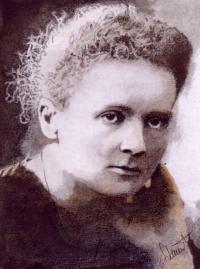 The joke went that Marie was her husband Pierre’s greatest discovery. The couple made some great scientific discoveries, and wrote many research publications together. In fact Pierre’s career rocketed after meeting Marie. What created this Midas touch in Marie? Let’s find out. The joke went that Marie was her husband Pierre’s greatest discovery. The couple made some great scientific discoveries, and wrote many research publications together. In fact Pierre’s career rocketed after meeting Marie. What created this Midas touch in Marie? Let’s find out.
Courageous women have always fascinated me. In today’s world, it is much easier for a woman to be courageous. But a hundred years ago, when societies were patriarchal in real sense of the term, it was certainly not easy.
I have deeply admired women like Rani Laxmibai & Devi Ahilyabai from India, and Marie Curie & Maya Angelou from around the world. Many of us would have pondered on questions such as, “What was the source of strength for such women? Was it a supportive father or relative, was it the inner strength which comes from connecting with deeper self or something else?” In this post I decided to dig deep into the story of Marie Skłodowska-Curie popularly known as Madam Curie and associated with the discovery of radium (along with her husband and life purpose partner).
Marie was born in Poland and migrated to France later. In spite of coming from a well educated and prosperous family, she had a difficult childhood as her father contributed finances to freedom movement of Poland. Her father, Władysław Skłodowski, taught mathematics and physics and had a strong influence on her career. Women were not allowed to enroll for formal education in those days and, she and her sister Bronisława became involved with the clandestine Flying University, a Polish patriotic institution of higher learning that admitted women students. Later during her higher education in Paris, she could not afford proper food and often fainted due to hunger.
It was their mutual interest in natural sciences that brought and drew Pierre and Marie together. Their mutual passion for science brought them closer and closer. Eventually Pierre proposed marriage and they became more than life partners, or life purpose partners. Their two shared pastimes viz. long bicycle trips, and journeys abroad, added to their magical relationship.
She was a physicist-chemist who conducted pioneering research on radioactivity. Not only she was the first woman ever to win a Nobel Prize, but also the only woman to win twice, and was part of the Curie family legacy of five Nobel Prizes. She was also the first woman to become a professor at the University of Paris. WOW what an amazing woman of substance.
She shared the 1903 Nobel Prize in Physics with her husband Pierre Curie and later received the 1911 Nobel Prize in Chemistry. Her achievements included formulating a theory of radioactivity, techniques for isolating radioactive isotopes, and the discovery of two elements, polonium and radium. Under her direction, the world’s first studies were conducted into the treatment of neoplasms, using radioactive isotopes. She founded the Curie Institutes in Paris and in Warsaw, which remain major centres of medical research even today.
Being a woman, she faced an obstacle at every step and nevertheless she kept persevering. Curie was awarded her doctorate from the University of Paris in 1903. The same month the Royal Institution in London invited the couple to give a speech on radioactivity. Marie was prevented from speaking, because of being a woman. Another tragedy struck Marie three years later when Pierre was killed in a road accident. Curie was obviously deeply disturbed by her husband’s death.
In 1921, US President Warren G. Harding invited her to the White House and presented her with the first radium extracted in the United States. She was honest and humble to the extent that she even returned her scholarship as soon as she began earning. Instead of living a lavish life, she gave much of her Nobel Prize money to friends, family, students, and research associates. She even requested that gifts and cash awards should be given to the scientific institutions she was affiliated with instead of her. It is believed that Albert Einstein remarked that Marie was probably the only person fame could not corrupt.
Her love for radioactivity actually led to her death too. The harmful impact of radioactive substances on human health had not been discovered in those days. She died at mere 66, due to aplastic anemia brought on by exposure to radiation from radium and X rays.
Marie remains an icon in the scientific world and a true role model. New Scientist carried out a poll in which Marie Curie was voted the “most inspirational woman in science”. Poland and France declared 2011 the Year of Marie Curie.The United Nations declared the same year as the International Year of Chemistry in her honour.
Her book “Radioactivity”, was published in 1935 after her departure. From alarm clocks to AC remotes, as soon as you see something with radium, you are reminded of the immortal Marie Curie.
—————–
Michael Thallium, Spain
http://www.michaelthallium.com/en/thallium-vitae/
Ghulam Sughra Solangi – A Woman of Courage
 Imagine you are woman. It is not very difficult to do so if you are already one. Now imagine you are a twelve year old girl. Not too difficult either, if you are already one, although I pretty much doubt you would be reading this if you are a twelve year old girl. If so, congratulations, because this is about you… well, not exactly about you, but about us all. Now let’s say you are that twelve year old girl living somewhere with your parents and you want an education because you are illiterate, but you are forced to get married to a man older than you. Then you deliver your first child at age 13 and your second at age 15. By the time you are 20 years old your husband abandons you and your children. You get divorced… That may seem very unlikely to happen in certain parts of the world, like in Europe, for instance, but unfortunately that is not so uncommon in other parts of the world. If you don’t believe it, let me tell you that is exactly what happened to Ghulam Sughra Solangi when she was a child. Imagine you are woman. It is not very difficult to do so if you are already one. Now imagine you are a twelve year old girl. Not too difficult either, if you are already one, although I pretty much doubt you would be reading this if you are a twelve year old girl. If so, congratulations, because this is about you… well, not exactly about you, but about us all. Now let’s say you are that twelve year old girl living somewhere with your parents and you want an education because you are illiterate, but you are forced to get married to a man older than you. Then you deliver your first child at age 13 and your second at age 15. By the time you are 20 years old your husband abandons you and your children. You get divorced… That may seem very unlikely to happen in certain parts of the world, like in Europe, for instance, but unfortunately that is not so uncommon in other parts of the world. If you don’t believe it, let me tell you that is exactly what happened to Ghulam Sughra Solangi when she was a child.
Ghulam Sughra Solangi was born in a little village in Pakistan in 1970. After her ordeal as a child and a young woman (she was just about to commit suicide), she decided she wanted to be on her own with her two children and something got into her head that turned her nerves to steel. She wanted to get an education despite all difficulties and oppositions. At age 31, Sughra completed a Bachelor in Education and later in 2003 she earned a Masters in Sociology. Sughra has helped thousands of rural women in Pakistan. She is the Founder and CEO of Marvi Rural Development Organization (http://marvi.org.pk/) and received the International Women of Courage Award in 2011.
The reason why I chose to write about Ghulam Sughra Solangi needs an explanation. A couple of years ago, Dr Amit Nagpal from India and I started a series of articles on great people, but we stopped writing for over a year. Then we decided to come back to our collaboration and we chose to write about great women. He would choose a woman from the Western World and I would choose a woman from the Eastern World. My surprise was that, generally speaking, if you search on the Internet, you realise there is a lot more of information about “great” men in history than “great” women and even more information about Western women than Eastern women. In other words, it seems there have not been great women in history, which is not true of course. So, I said to myself, there must be a woman from the East I can write about and she must be alive. There you go! I didn’t choose Ghulam Sughra Solangi because of her great achievements in life or because she received many different awards. I chose her because, to me, she represents millions of women in the world who struggle and, against all odds, they thrive.
I like to write about people I know or people I am somehow in touch with. That is why I tried to contact Sughra via email a couple of weeks ago, but I wasn’t succesful. So, by the time I write these lines I just know about her because of what I read on the Internet. However, she reminds me of another woman I met some years ago, Tina Kpan from Liberia, a woman of courage and a Social Worker who is helping lots of children in her country.
The world is full of people who are not famous, but they really do great things. Learning how to see those things is not an easy task, specially in a world full of too much negative information. I am a man and like me, there are millions of men in the world. I am not a woman, but I can’t help acknowledging all of those women in the world who make the planet a better place. I really tried to imagine I was a twelve year old girl forced to get married and deprived from education. It is a hard thing to do and I would not like to be on her shoes. But knowing that the little girl kept going and thrived by helping other girls and women, that inspired me and I think I made the right choice to write about Sughra, because this article, in the end, is not about her, it is not about women. It is about us!
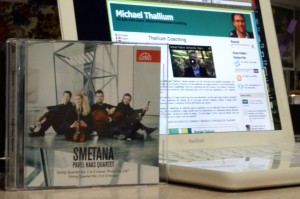 Today, around noon, I walked into La Quinta de Mahler (LQM), a place I usually go to and of which I have written in some other articles. Since I couldn’t find what I was looking for, I asked Juan Lucas, the person in charge of this extraordinary music shop in Madrid, if he could recommend me any new records. Right away I heard, Marina – Juan’s partner – say out loud “This one!” She was sitting in an armchair organising some CDs. I looked back and saw her holding a CD of the label Supraphon. It was a recording of Bedřich Smetana’s quartets nos. 1 & 2 performed by the amazing Pavel Haas Quartet. A wonderful performance, by the way. The extraordinary Pavel Haas Quartet is made up of Veronika Jarůšková (1st violin), Marek Zwiebel (2nd violín), Pavel Nikl (viola) and Peter Jarůšek (cello). I bought the CD and left the shop to attend some professional matters. I had to wait until the evening in order to listen to this music. And I did it in a way that not a few may find a little strange. I recorded the CD on my computer and I transfered it to my iPod. Then I went out to do some physical exercise, headphones on, and listen to Smetana’s quartets while I was biking in the countryside. Who the heck is going to do some sport and listen to chamber music, even more, to the string quartets of a Czech composer unkown to most inhabitants on this planet!! Yes, there are some of us who may be a little bit “weird” and do this sort of things. But I could also say that the “weird” ones are those too many millions of people who don’t do that and are missing that experience… Anyway, the thing is that I ended up doing three things in one, my particular “3 in 1” session: exercising my muscles (body), unleashing my thoughts (mind) and delighting my ears with beautiful music (spirit). Today, around noon, I walked into La Quinta de Mahler (LQM), a place I usually go to and of which I have written in some other articles. Since I couldn’t find what I was looking for, I asked Juan Lucas, the person in charge of this extraordinary music shop in Madrid, if he could recommend me any new records. Right away I heard, Marina – Juan’s partner – say out loud “This one!” She was sitting in an armchair organising some CDs. I looked back and saw her holding a CD of the label Supraphon. It was a recording of Bedřich Smetana’s quartets nos. 1 & 2 performed by the amazing Pavel Haas Quartet. A wonderful performance, by the way. The extraordinary Pavel Haas Quartet is made up of Veronika Jarůšková (1st violin), Marek Zwiebel (2nd violín), Pavel Nikl (viola) and Peter Jarůšek (cello). I bought the CD and left the shop to attend some professional matters. I had to wait until the evening in order to listen to this music. And I did it in a way that not a few may find a little strange. I recorded the CD on my computer and I transfered it to my iPod. Then I went out to do some physical exercise, headphones on, and listen to Smetana’s quartets while I was biking in the countryside. Who the heck is going to do some sport and listen to chamber music, even more, to the string quartets of a Czech composer unkown to most inhabitants on this planet!! Yes, there are some of us who may be a little bit “weird” and do this sort of things. But I could also say that the “weird” ones are those too many millions of people who don’t do that and are missing that experience… Anyway, the thing is that I ended up doing three things in one, my particular “3 in 1” session: exercising my muscles (body), unleashing my thoughts (mind) and delighting my ears with beautiful music (spirit).
Bedřich Smetana (1824-1884) wrote his String Quartet no. 1 in E minor, entitled “From my life”, between October and December 1876, that is, at age 52, two years after he had gone deaf. This Quartet was performed for the first time in April 1878 — by the way, for the occasion it was Antonín Dvořák himself on the viola —, in Josef Srb’s apartment. Srb had been playing the role of secretary since Smetana had gone deaf in 1874. In a letter dated 12 April 1878, Smetana told his friend Josef Srb the following in regards of his quartet:
“I wanted the notes to depict the course of my life [..] The first movement: Affection for the arts in my youth, romantic predominance, ineffable desire for something I could not utter or clearly imagine, as well as the quasi-premonition of my future misfortune, the long sounding tone, which in the finale rose from the beginning, is the fatal whistling of the highest tones in my ear, which announced my going def in 1874. I ventured upon this small triffle because it was so viatal for me. The second movement: The quasi-Polka takes me back to the merry life of my youth, when as a composer I showered the young world with my dance pieces, myself having been known as a passionate dancer, etc. The middle moevment: Meno vivo, in D flat major, is the one that in the opinion of the players [...] is by no means possible to perform. Purity of the chords allegedly cannot be attained; I point out that the tones in this moevment depict remainders of the aristocratic circles I lived among for long years. The third movement: The Largo sostenuto evokes the bliss of my first love for a girl who would later become my faithful wife. The fourth movement: Getting to know the manner of the folk music element, the joy of the result of this yourney, until it was disrupted by the ominous disaster of mine, the beginning of deafness, view of the dreary future, a little ray of hope for improvement, yet still a painful feeling in the light of the ouset of my career. This was perhaps the purpose of this composition, which is almost entirely private, therefor wittingly written for 4 instruments that in a narrow circle of friends are supposed to talk among themselves about that which has moulded me so eminently. Nothing more. [...] I did not intend to write a quartet according to the formula and according to the custom of the usual forms.”
All those things Smetana was talking about in his letter are the ones I tried to listen to while I was biking in the nature. And, certainly, it is true that when you’re listening to this work that high tone (whistling) depicting the composer’s deafness is as unmistakable as striking.
In regards with the String Quartet no. 2 in D minor, Smetana completed it in March 1884, that is, a year before he died. In a letter to his friend Srb, Smetana he said:
“I have finished the quartet’s first movement, yet I am nonplussed as regards its texture, since the movement has a truly extraordinary form and is difficult to comprehend, with a kind of chaos dominating throughout, which, it would seem, will cause great troubles for the players – it is a consequence of my unfortunate living. – I feel limp, sleepy and I am afraid that my musical ideas are slowly losing their vitality, it appears to me that everything I treat musically in my brain is somewhat cloaked by a mist of despondency and grief.”
This quartet was premiered again in Josef Srb’s apartment and Smetana could “hear” it, visually and in his imagination. In a letter to Srb of 24 May 1883, Smetana expressed his satisfaction:
“The quartet has begung gathering strength and I will definitely have it printed, since it is good, featuring melodic elements, it is abounding in emotion and novelty.”
However, the quartet was not published until after Smetana’s death, and the first critical edition of the score would not see the light until 1944, sixty years later.
When I came back from my particular “3 in 1” session — body, mind and spirit exercise —, I opened my email inbox and saw the following email from a good friend, Julio Mora, with whom I shared long walks and enriching conversations in the last years — by the way, he is an engineer and a master of Nativity scenes; he also has a very interesting blog in Spanish called Belenes en movimiento (Nativity Scenes in Motion):
Michael:
This is for you to recommend it on your blog, assuming you find it interesting. Some days ago, I was in Siena (Italy). Just oposite the espectacular façade of Siena’s cathedral, there is a very modest church. Since I am a little weird traveller, I walked in and I had one of the best surprises in the last years.
A choir, all dressed in green, was rehearsing. The impact it made on me was so strong that I stayed insde the church until the end of their performance. When they finished, I stood up and started to clap my hands like a fool. Inside the church, apart from the choir, there were no other people but my wife and I. The choir conductor walked up to me and made a bow. I still have a lump in my throat when I recall that experience.
Will that be what you feel, those of you who really understand music? What choral will that be? Maybe some of your friends know something about it.
Searching in Google, I think the church’s name is Santissima Annunziata.
You don’t have to understand music to enjoy it. Certainly, the more your knowledge is, the more nuances you will perceive. But enjoyment takes a very different way from that of savvyness. I am glad to know that my good friend Julio really enjoyed that choral music, specially knowing that in more than one occasion he told me he was tone deaf and he did not understand music. It is a matter of choice and opening your ears. And as it happens with every choice you make, it is a matter of elimination. When you make a choice or a decision, in that very moment you make it, you are eliminating some other millions of possible choices. That is why it is important to know what decision you are making and, even more, to be aware of the things you are putting aside when making your choice…
Julio’s experience feels just right to conclude this article. I encourage you, whoever is reading these words, to listen to “From my life”, Smetana’s first string quartet. He would be astonished if he would know that some 130 year after his death, someone could enjoy “his life” while biking in the nature and listening to a string quartet inside a tiny device… I am sure Smetana would laugh out loud with vehement disbelief. These are the wonders of technology!
I thank you, dear reader, for keeping your interest up to here. I hope your choice of reading this article up to the end has helped you appreciate your time and all those things you stopped doing when you started reading these lines. I’ll be more than happy, if there is something you have learnt from it.
Michael Thallium
Global & Greatness Coach
Book your coaching here
You can also find me and connect with me on:
Facebook Michael Thallium and Twitter Michael Thallium
 I stumbled upon this recording of Treemonisha, just by chance, when I was prowling for some music at La Quinta de Mahler, an excellent music shop very near the Teatro Real, in Madrid, Spain. I usually visit this shop in search for music and good conversation. And most of times I get both of them. It was José, one of the shop attendants, who recommended me the Pentatone recording of this opera written in 1910 by Scott Joplin (1868-1917). However, its premiere with orchestra would have to wait until 1972. In fact, neither Scott Joplin was able to premiere the orchestral version in his life time. He could only do a performance of this work in 1915: it was financed by him and performed on the piano by Joplin himself. No orchestra, my friends! And if it were not enough, in 1962, a trustee destroyed Joplin’s manuscript of the orchestration because he considered it had been too damaged by water and it was not worth saving it… So, the version we know today its but an approximation to Joplin’s ideas based on a piano reduction only appeared in 1970, sixty year after its composition. Then, there he was, the composer and jazz musician Gunther Schuller (1925- ), who wrote the orchestration for the Houston Grand Opera in 1975. And this is the orchestration of the above mentioned Pentatone recording. I stumbled upon this recording of Treemonisha, just by chance, when I was prowling for some music at La Quinta de Mahler, an excellent music shop very near the Teatro Real, in Madrid, Spain. I usually visit this shop in search for music and good conversation. And most of times I get both of them. It was José, one of the shop attendants, who recommended me the Pentatone recording of this opera written in 1910 by Scott Joplin (1868-1917). However, its premiere with orchestra would have to wait until 1972. In fact, neither Scott Joplin was able to premiere the orchestral version in his life time. He could only do a performance of this work in 1915: it was financed by him and performed on the piano by Joplin himself. No orchestra, my friends! And if it were not enough, in 1962, a trustee destroyed Joplin’s manuscript of the orchestration because he considered it had been too damaged by water and it was not worth saving it… So, the version we know today its but an approximation to Joplin’s ideas based on a piano reduction only appeared in 1970, sixty year after its composition. Then, there he was, the composer and jazz musician Gunther Schuller (1925- ), who wrote the orchestration for the Houston Grand Opera in 1975. And this is the orchestration of the above mentioned Pentatone recording.
Both the libreto and music were written by Scott Joplin. Simply and clearly, it tells the
 La Quinta de Mahler, Madrid. story of a girl, Treemonisha, who has learnt how to read, write and do arithmetic. This leads her to know new things and become aware of all the superstitions and fear caused by the ignorance of the people in her community. They still cling to superstition and sorcery. People resist change, because superstition is part of their culture, and they categorically reject Treemonisha. The conjurers and preachers abduct her, basically because she tells them they sponge off of others. In the end Treemonisha is saved just in time by a friend and she is elected the leader of her community. She uses enlightment and reason to put and end to fear and superstion.
I like to use music as a metaphore in the emotional mediation of change processes (coaching) and in leadership. And Treemonisha helps me talk about some aspects I consider important for any person who embarks on the adventure of conscious change, be it your own change or facilitating others change.
Aspect 1: TIME. In a change process we all have our own timings, we need to know how to see, set and respect them. Every person must flow to the pace of their own beat (time). Scott Joplin wrote Treemonisha, but he never could premiere the orchestral version of it in his life time. A lot of years and ups and downs needed to pass by in order to see that premiere.
Aspect 2: COLLABORATION. There are goals which depend only on you. Some others, however, may involve many other people. A lot of people were involved in the orchestral version of Treemonisha, so that it could be premiered 58 years after Joplin’s death.
Aspect 3: FEAR. Fear is the major obstacle for change. To be aware of it is the first step to change. You have to confront your fears and learn new ways to get over them. Treemonisha beats her fear by leaving ignorance behind and becoming aware that life can not be based in irrational superstitions.
Aspect 4: PERSEVERANCE. When we become aware of things and learn something new that we want to integrate in our lives, we need to persevere. Treemonisha perseveres up to the end despite the threats and pressures by the instigators of superstition and fear.
ASPECT 5: REWARD. When we start an important change process we must be aware of the rewards of our endevours in our lives. Treemonisha’s reward is not only her liberation from fear, but also the liberation of the people in her community, who, in turn, place their trust on her to lead that change process.
Besides the musical enjoyment, Scott Joplin’s opera can also help us learn a little more about Afroamerican English. You can always learn new things and involve people around you in your learning… just in case it helps them too!
Michael Thallium
Global & Greatness Coach
Book your coaching here
You can also find me and connect with me on:
Facebook Michael Thallium and Twitter Michael Thallium
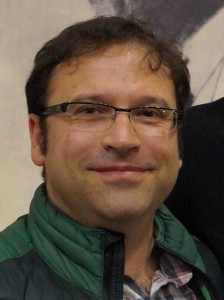 Michael Thallium, Global & Greatness Coach Over a year ago, I wrote On my listenings (Part 1). Time flies and it was just about time for me to continue with this series of articles. I won’t repeat what I have already said in the above mentioned article, so I recommend you to read it if you didn’t yet.
The same way it happened with the great exploration voyages — I mean, one voyage came out of another one which in turn led other explorations voyages and so on —, the trip you embark on when you listen to a music work takes you to a different work and this work leads you to another one. You go from one composer to another composer, from one period of time to another period of time, from one style to another style… The important thing is not to lose the north: in my case, my north is to improve the way I listen to people through music. Below you can find a list with some of the works I have been experimenting with:
GESUALDO, Carlo (1566-1613, Italy)
Responsoria was written in 1611, two years before the gruesome death of Gesualdo, who was a prince, a count, a double murderer… and a composer. This excellent recording is performed by La Compagnia del Madrigale. It also includes madrigals by some other composers contemporary of Gesualdo — Pietro Vinci (1525-1584), Luzzasco Luzzzaschi (1545-1607), Giovanni de Macque (1548/50-1614) and Luca Marenzio (1553-1599) — which are carefully placed among Gesualdo’s lithurgical chants. Glossa, 2014.
MONTEVERDI, Claudio (1567-1643, Italy)
Books of Madrigals nos. 2, 3 & 5 performed by the Italian vocal ensemble Delitiae Musicae conducted by Marco Longhini. This recordings are delicious and more than one person will be surprised when listening to them. Naxos, 2004-2006.
Book of Madrigals no. 8 “Madrigali guerrieri ed amorosi” beautifully performed by Concerto Vocale conducted by René Jacobs. Harmonia Mundi, 2002.
SCHÜTZ, Heinrich (1585-1672, Germany)
History of the Resurrection (Auferstehungshistorie). This work was written in Dresden, in 1623, during the War of the Thirty Years (1618-1648), a war that devastated central Europe. This recording is performed by the Dresdner Kammerchor, The Sirius Viols and the ensemble Instrumenta Musica, all conducted by Hans-Christoph Rademann. Carus, 2014.
Musical Exequies (Musicalische Exequien), is a wonderful work written in Dresden, in 1636, during the devastating War of the Thirty Years (1618-1648). The Prince Heinrich von Reuss organised every single detail for his own funeral, from the music to be sung — composed by Schütz — to the coffin. It is brilliantly performed by the Belgian vocal ensemble Vox Luminis conducted by Lionel Meunier.
BUXTEHUDE, Dietrich (1637-1707, Germany/Denmark)
Ciaccona: il mondo che gira is a recording which includes different works by Bustehude: five sonatas, one passacaille, one ciaccona and two cantatas superbly performed by Stylus Phantasticus. Alpha, 2002.
ZELENKA, Jan Dismas (1679-1745, Bohemia)
Responsoria pro hebdomada sancta & Lamentatio Ieremiae Prophetae, brilliantly performed by Collegium Vocale 1704 & Collegium 1704 conducted by Václav Luks. Accent, 2012.
Officium defunctorum & Requiem performed by Collegium Vocale 1704 & Collegium 1704 conducted by Václav Luks. Accent, 2011.
I think Zelenka deserves a much better place in music history.
HÄNDEL, Georg Friedrich (1685-1759, Germany/England)
Brockes Passion performed by the Kölner Kammerchor and the Collegium Cartusianum conducted by Peter Neumann. Carus, 2010.
BACH, Johann Sebastian (1685-175o, Germany)
Goldberg Variations performed by the harpsichordist Kenneth Weiss. It is a live recording of a concert that took place in 2008. Satirino, 2008.
Musical Offering performed masterly played by the Italian ensemble Il Gardellino. Passacaille, 2014.
The Art of Fugue performed by the viols ensemble Fretwork. I strongly recommend this version, it is different from most of the recordings out in the market now.
B flat minor Mass performed by the Stuttgart Baroque Choir and Chamber Orchestra conducted by Frieder Bernius. Carus, 2006.
HAYDN, Franz Joseph (1732-1809, Austria)
The complete String Quartets played by Festetics Quartet on period instruments: Istvan Kertész (violin Milanese School, 18th century), Erika Petöfi (violin Matthias Thier, Vienna 1770), Péter Ligeti (viola Matthias Albanus, Bolzano 1651), Rezsö Pertorini (violoncello Anonymous French, 17th century). The box consists of 19 CDs. Outhere, 2014.
The Creation. Andreas Spering, Capella Augustina, Cologne Vocal Ensemble & Max Ciolek. Naxos, 2005.
BEETHOVEN, Ludwig van (1770-1827, Germany)
The complete piano concertos performed by the pianist Paul Lewis and the BBC Symphony Orchestra conducted by Jiří Bělohlávek. Harmonia Mundi 2010.
BRITTEN, Benjamin (1913-1976, United Kingdom)
The Turn of the Screw. Peter Pears (tenor), Jennifer Vyvyan (soprano), David Hemmings (trebble), Olive Dyer (soprano), Joan Cross (soprano), Arda Mandikian (soprano), English Opera Group Orchestra conducted by Benjamin Britten himself. Decca, 1955.
Death in Venice. Philip Langridge (tenor), Alan Opie (baritone), Michael Chance (counter-tenor), BBC Singers, City of London Sinfonia conducted by Richard Hickox. Chandos, 2005.
Suites for Cello played by Daniel Müller-Schott. Orfeo 2011.
GUBAIDULINA, Sofia (1931- , Russia)
Repentance is an excellent recording and includes Gubaidulina’s works from different periods: Serenade for solo guitar (1960), Piano Sonata (1965), Repentance (2008) and Sotto Voce (2010/13). Bis, 2014.
I will come back to you in the future and let you know about the works which have helped me improve my listening skills. Remember: an experiment is a trip that can take you to unsuspected places.
Michael Thallium
Global & Greatness Coach
Book your coaching here
You can also find me and connect with me on:
Facebook Michael Thallium and Twitter Michael Thallium
Michael Thallium, Global & Greatness Coach Hello! Thank you and congratulations! Thanks for making it to get here and congratulations because it hasn’t been easy. If there exist miracles, I’d say, no wonder, this is one of them. To start with, just the fact you are reading this —not to say understanding it— has taken a lot of work from your side. You have spent many years of your life learning how to combine thousands of different combinations among a, b, c, d, e, f… and all those letters which build up the “alphabet”. But it is not only that. Apart from learning lots of words, you also had to learn how to combine them so that they can make any sense to you or anybody else and, if that were not enough, it just so happens that your anatomy —your mouth, your lips, your teeth, your tongue, your vocal folds— allows you to enunciate them as easily as if you were just breathing —and I didn’t mention the amount of orders your brain has to send to your many face muscles so that, for instance, “phase” sounds “phase” and not “face”—. On top of that, we are lucky enough to share the same communication code, in this case, English. Trust me, it’s a miracle! If I would be now writing in German, you wouldn’t understand a word unless you could also understand that code. In the world we are living today at the beginning of the 21st Century, it seems English has become a lingua franca or bridge language. But it hasn’t always been like that. French would have been that bridge language roughly 150 years ago, and a few more centuries back, Latin, Arabic or Greek would have been the languages of reference. On the other hand, if we just look at the number of native speakers of a language, the most spoken language in the world is Mandarin Chinese followed by Spanish. If you are reading and understanding this, it is because you and me have been born in a part of the world where, what a paradox!, Chinese sounds Greek to us!
But it doesn’t stop there. In order for you to have gotten here, your parents had to get together and mate at a certain point, and so did your grandparents and the parents of your grandparents and your greatgrandparents’ parents… It’s only 80 generations that separate us from that moment where we started to count time in our modern calendar in most countries in the world, some 21 centuries ago. Don’t think 2,000 years is a long time. Actually, it seems to be very little. Our species, the one we agreed to call homo sapiens (the man who knows), appeared around 195,000 years ago. If you think that’s a lot, let me tell you you are quite wrong. The Earth dates back to around 4,500 million years… And before us, there existed many other species we cannot even think of. The Earth is the only planet which harbours intelligent life. No matter how much we want to dream or fantasize about life in other planets or other solar systems. The truth is that we are alone here. And we are likely to go on like this for some thousands of years more.
Let me say it again: Thank you and congratulations! We’ve made it, trust me, against all odds! There’s nothing like putting things into perspective. Our lives, as important as they can be to us, are insignificant depending on the perspective you take. If we agree that the average life expectancy of a person is around 74 years —when I am writing these lines, there are some countries in the world where life expectancy is over 80 years whereas in some other countries it is less than 40 years—, then, everyone of us will spend around 650,000 hours on this planet. Supposing that I ever reach 74, I’ve already used up 372,000 hours of my time here. So, I’ve only got around 278,000 hours more to live. Each and every of our lives represent much less than 0.01% of the time since the homo sapiens first trod the Earth. We are just a mere instant.
However, it’s not all about quantity but about quality. Why get bitter and suck the life out of ourselves or any other people? Why engage in any kind of a toxic relationship that only poisons the extremely limited time we spend on the face of the Earth? What prevent us from being happy and making those around us happy?
There may be several reasons why you are reading this. Maybe you know me in person and you are curious about my writing, unlikely; maybe you just heard of me or my name somewhere and you just ended up reading me, it could be; however, you are more likely to have bumped into this article by pure chance, you may not even know me at all and most probably we’ll never meet, but for some reason that you only know, you have kept reading to this point. In any of those cases, once again: I thank you and congratulations! Thanks for sharing a negligible part of your time with me. Congratulations because, somehow, we have just coincided. And if I have ever had the immense fortune that you are part of my life and I was also lucky enough to contribute to your happiness the same way you have contributed to mine, my heartfelt thanks to you. It hasn’t been easy. We have made it against all odds. Perspective 650,000.
Michael Thallium
Global & Greatness Coach
Book your coaching here
You can also find me and connect with me on:
Facebook Michael Thallium and Twitter Michael Thallium
I’d like to bring your attention today to Oliver Sacks’ farewell.
“A MONTH ago, I felt that I was in good health, even robust health. At 81, I still swim a mile a day. But my luck has run out — a few weeks ago I learned that I have multiple metastases in the liver. Nine years ago it was discovered that I had a rare tumor of the eye, an ocular melanoma. Although the radiation and lasering to remove the tumor ultimately left me blind in that eye, only in very rare cases do such tumors metastasize. I am among the unlucky 2 percent.
I feel grateful…”
If you wish to keep reading his article, go to New York Times HERE
Michael Thallium
Global & Greatness Coach
Book your coaching here
You can also find me and connect with me on:
Facebook Michael Thallium and Twitter Michael Thallium
 Autumn Moon (Luna de otoño), Scott Kahn
I first learnt about Ēriks Ešenvalds (b. 1977) in May 2014, while I was in Riga in order to get some navigational certificates which, a couple of weeks later, would allow me to sail around the Arctic on board the M/V Plancius, a vessel where I spent four months working for the Dutch company Oceanwide Expeditions. In my spare time in Riga, I took the chance to walk around the city trying to find out about some living Latvian composers. In order to do that, I visited different places, among them the Jāzeps Vītols Latvian Academy of Music and I also asked people on the streets. Finally, I ended up in a music shop, apparently the only shop you can find scores of Latvian composers in Riga: Musica Baltica. There I aksed one of the shop assistants if she could give me the name of some relevant living Latvian composers. Very kindly, she gave me three names: Peteris Vasks (I had already heard of him before flying to Latvia and I had also listen to some of his music), Ēriks Ešenvalds and Rihards Dubra. I asked her if it would be possible to get their email addresses, because I wanted to get in touch with them. In the end and after some complications, I managed to meet Rihards Dubra, a person whom I have very good memories and someone I hope to meet again someday, somewhere. I could not make it to meet Ēriks Ešenvalds. By the time I got an email from Ēriks explaining that he had no time for a meeting, I had already left Latvia. And that was it!
Months went by. I spent four months around the Arctic working for Oceanwide Expeditions and I came back to Madrid by the end of September. Time kept passing until mid January 2015, when I received an email from Ēriks Ešenvalds, around eight months after our first contact. In his email, he told me about the imminent launching of Northern Lights, his latest work for Hyperion Records. Yesterday, first of February 2015, I downloaded his work from iTunes and I spent my Sunday afternoon listening to it -I am also listening to his music while I am writing these words now.
In the last couple of year, as if by magic, life has presented me with situations where I started connecting dots. Having the chance to witness the formation of the Northern Lights over my time around the Arctic on board the del M/V Plancius, Ēriks Ešenvalds’ latest work takes on a special meaning to me. One of the first persons who came to my mind while I was listening to Northern Lights was Henk Strietman, whom I met during those Arctic months. I remember having very interesting conversations with him about life, music and the Arctic. It was thanks to him that I learnt about some composers and their music, a completely new world for me. Among others And God created the great whales by Alan Hohvaness (1911-2000), Canto Ostinato by Simeon ten Holt (1923-2012).
Northern Lights was recorded at both the Trinity College Chapel and the Ely Cathedral. The music has been performed by the Trinity College Choir conducted by Stephen Layton. The album consists of 16 songs for choir and some peculiar instruments such as harp, organ, brass, percussion, glass and chimes… The songs are based on different texts in different languages: Latin, English, Sami and Latvian. If I am writing about these works now, it is because I consider they are beautiful choral music which, in my opinion, will stand the test of time.
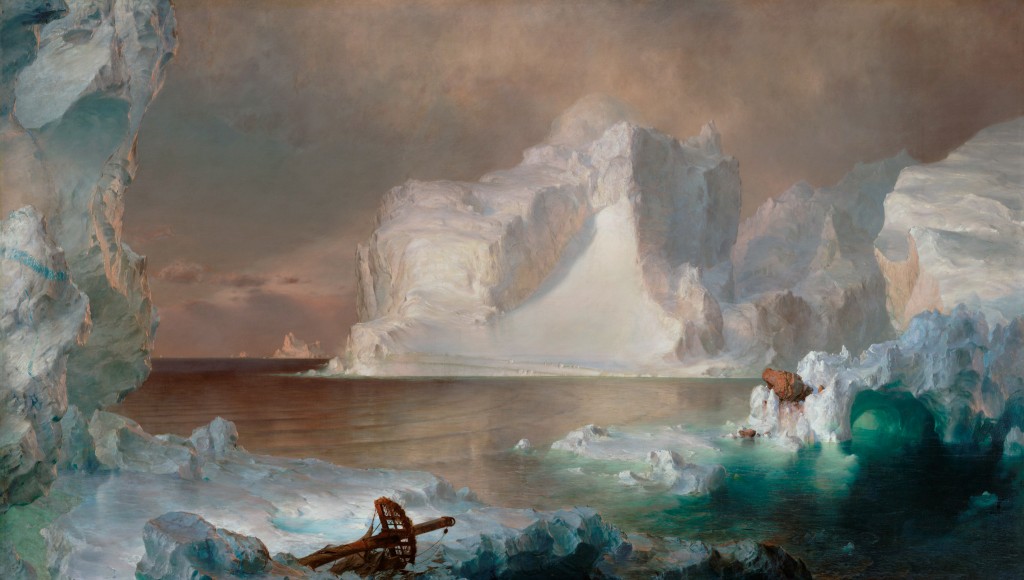 The Icebergs, Frederic Edwin Church, 1861. The first track, O salutaris hostia, may be the most popular work among Ešenvalds’. It is based on a Latin text from an antiphon for the feast of Corpus Christi. O salutaris hostia is a meditative song with beautiful diatonic melodies for two sopranos hovering over the whispering and sublime voices of the choir. You cannot remain indifferent before such peaceful harmonies, emotional, spiritual, simply beautiful. The New Moon is the second track of the album and it is based on a poem by the troubled and tragic American poet Sara Teasdale (1884-1933) who died by her own hand in 1933. You can hear the sound of wine glasses and chimes which create an other-worldly atmosphere behind the quiet singing of the choir. Psalm 67 starts with a plain chant for baritone followed by the choir. Trinity Te Deum starts with a powerful introduction by the brass ensemble and the percussion in the style of a fanfare followed by the choir and the organ, a kind of hymn embellished by the sound of the harp in some passages. Northern Lights starts with a quiet unison by the choir followed by the singing of a tenor voice in the style of plain chant and again surrounded by the mystical sound of wine glasses evoking the tantalizing Northern Lights. The text is divided into three parts: the intro in Latvian and based on a Latvian folk song, the second part is based on a text by the American Arctic explorer Charles Francis Hall (1821-1871) who was poisoned by one of his crew members during the Polaris Expedition; the third part is based on a text of another Arctic explorer, the Norwegian Fridtjof Nansen (1861-1930), who was awarded the Peace Nobel Prize in 1922. This is the work which gives the name to the album. There must be a reason for it!! It is followed by The Heavens’ Flock, based on a poem by Paulann Petersen (b. 1942), The Early Rose, a choral singing acompanied by harp and based on a text by the Australian poet Emma Jones (b. 1977), Merton College Service, based on Latin texts from Luke’s gospel, Rivers of light, which starts with a text in Sami in the style of a folk song, Ubi Caritas, based on a Latin antiphon for Maundy Thursday, Amazing Grace, based on the well-known hymn by John Newton (1725-1807), O Emmanuel, a work for choir and mezzosoprano with a Latin text from an antiphon for 23 December, Who can sail without the wind? an English text based on the Swedish folk song Vem kan segla förutan vind?, Stars based on a another poem by Sara Teasdale and, finally, Only in Sleep, also based on poem by Sara Teasdale, a perfect end for this album.
I enourage anybody who is reading these words to listen to Northern Lights. You will not remain indifferent. It is beautifuf music, simple, full of emotions and spirituality. And for those of you who have never seen the actual Northern Lights, maybe the music of Ēriks Ešenvalds helps you to be transported to a world you will fully understand if you ever look at the sky and start connecting the dots. And this leads me to the following question: what makes us connect the dots?
Michael Thallium
Global & Greatness Coach
Book your coaching here
You can also find me and connect with me on:
Facebook Michael Thallium and Twitter Michael Thallium
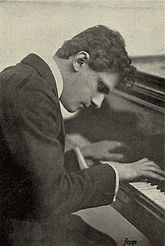 Today I have discovered Leo Ornstein. Well, actually, I discovered his music because Leo Ornstein passed away in 2002 being more than a hundred years old (it’s not clear what his date of birth is, but if you take 1893 as a valid date, Ornstein died at around 109). I might have heard of his name before, and I might even have found out about this American composer of Ukrainian origin on the Internet. But it has only been today that I have bought some of his recordings -Piano Music (Naxos) performed by Janice Weber; Piano Music (Hyperion) performed by Marc André Hamelin- and read carefully the web page that his son Severo and grandson David dedicated to him after his death. I must say that while I’m writing these lines, I’m listening to his complete works for cello and piano performed by the cellist Joshua Gordon and the pianist Randall Hodgkinson for New World Records, which I recommend to anybody who wants to know this composer a little bit better, a composer who was branded as the last of the original 20th century mavericks. (You can also listen to some of his music audio files for free here: http://poonhill.ipower.com/audio.html) Today I have discovered Leo Ornstein. Well, actually, I discovered his music because Leo Ornstein passed away in 2002 being more than a hundred years old (it’s not clear what his date of birth is, but if you take 1893 as a valid date, Ornstein died at around 109). I might have heard of his name before, and I might even have found out about this American composer of Ukrainian origin on the Internet. But it has only been today that I have bought some of his recordings -Piano Music (Naxos) performed by Janice Weber; Piano Music (Hyperion) performed by Marc André Hamelin- and read carefully the web page that his son Severo and grandson David dedicated to him after his death. I must say that while I’m writing these lines, I’m listening to his complete works for cello and piano performed by the cellist Joshua Gordon and the pianist Randall Hodgkinson for New World Records, which I recommend to anybody who wants to know this composer a little bit better, a composer who was branded as the last of the original 20th century mavericks. (You can also listen to some of his music audio files for free here: http://poonhill.ipower.com/audio.html)
I remember some words I heard from Robert Greenberg on one of his great courses:
 Leo & Pauline “composers are people who describe what they see, hear, understand, feel, and perceive in musical terms”. Composers are “people”, not “gods”. And this is, precisely, what makes me write now about Leo Ornstein and set him as an example of what I called a “transforming discovery”. And I also hope to come up with some reflections about everything we don’t know when we think we know. To be fair with Ornstein’s career as a musician, it is impossible not to mention his wife Pauline, who transcribed and copied most of his scores. I would even go further and dare to say she was essential in most of Ornstein’s works.
Leo Ornstein had a brilliant career as a concert pianist and composer at the beginning of the 20th century. In his heyday as a pianist, he walked away from his fame by the mid 1920s to dedicate himself to teaching and composing. From the fame hall he entered the room of anonimity, which is the same as to say he was cast into oblivion. But this did not prevent him from having a long life as a composer… And long it was indeed! Ornstein wrote his Sonata no. 8 at the age of 98…
I was saying that composers are not gods. It is us making them gods, we “pedestalize” them depending on taste, fashion and, during the second half of the 20th century and the beginning of the 21st century, marketing. And the same way we pedestalize them, we also cast them into oblivion, into indifference… A similar case to Ornstein’s is the composer and pianist Leopold Godowsky (1870-1938), who had a lot of fame in his day, but whose music is known by just a few people today. If I would name Vivaldi, Bach, Mozart or Beethoven, most people in the Western world would recognise them almost immediately, even if they had never listened to any of their works. And although it is true that the music of those composers has transcended modern Western history, that doesn’t mean it will keep transcending in 100 or 200 years.
Let’s take some perspective. By the time I’m writing this words, Vivaldi died 274 years ago, Bach 265 years ago -I remind you that Bach was renowned as an organist in his lifetime, but his recognition as a composer for most audiences would not arrive until around 80 years after his death, when his music was rescued by Felix Mendelssohn-, Mozart 224 ago, Beethoven 188… Two hundred years can be a lot or just a few depending on our point of view. For humankind history, 200 years is a miserable instant. Godowsky died 77 years ago (which is less than the average of the life expectancy of a person in most Western countries nowadays)… Ornstein died 13 years ago. Will human beings keep on listening to Bach, Mozart or Beethoven in hundred or two hundred years time? I don’t know, but it could be that they might be cast into oblivion, too. It has happened to many other people before and after them. Will we keep on listening to Elvis Presley, The Beattles, Queen, Deep Purple, Abba in 25 years time from now? I think that the very moment someone’s music stops connecting with the listener, then that music and the person who wrote it are simply forgotten (and I dare to say that during the second half of the 20th century and the beginning of the 21st century, if there is no marketing, oblivion takes over every living creature). Who will people connect with in 80 years time when I most probably will not be here any more?
 Leo Ornstein at 107 years old Let’s go back to Leo Ornstein, who has been a real discovery for me, more because of the reflections his case aroused in me than because of his music. The main reflection is that one which would answer the following question: What makes us connect with others? And it’s even more interesting to answer this other question: What makes us not to want to connect with others? Ornstein connected with great audiences at the beginning of his career as a concert pianist, but then he decided to disconnect and was forgotten… This leads me to ask myself the following question: Am I really connecting now with the eventual reader of these words or will this article simply be “pedestalized” in the hall of oblivion? Alas, marketing…!
Michael Thallium
Global & Greatness Coach
Book your coaching here
You can also find me and connect with me on:
Facebook Michael Thallium and Twitter Michael Thallium
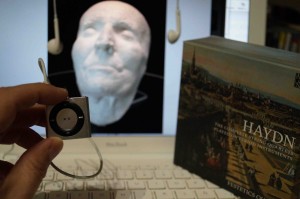 I have the String Quartet no. 36 in b flat major by Joseph Haydn put in my iPod shuffle, a tiny little electronic device in which you can “stack up” lots of music. These kind of devices were in fashion at the beginning of the 21st century in many countries around the globe. No-one would have told Mr Haydn that two centuries after his death someone would be listening to his music while walking, jogging or doing any other activity, and this without disturbing anybody else thanks to another great invention from the 20th century: the headphones. You can literally put any kind of music into your ears without the need to go to a concert hall or to have any musicians in front of you. Haydn himself would be astonished with that! Although I don’t know if he would become even more astonished with the fact that, after being dead and buried, someone would cut his head off and that his skull would be around for 145 years before “meeting” his body again! While I’m writing these lines, I’m listening to the above mentioned string quartet, but the piano Sonata no. 16 by Franz Schubert is on cue. I have the String Quartet no. 36 in b flat major by Joseph Haydn put in my iPod shuffle, a tiny little electronic device in which you can “stack up” lots of music. These kind of devices were in fashion at the beginning of the 21st century in many countries around the globe. No-one would have told Mr Haydn that two centuries after his death someone would be listening to his music while walking, jogging or doing any other activity, and this without disturbing anybody else thanks to another great invention from the 20th century: the headphones. You can literally put any kind of music into your ears without the need to go to a concert hall or to have any musicians in front of you. Haydn himself would be astonished with that! Although I don’t know if he would become even more astonished with the fact that, after being dead and buried, someone would cut his head off and that his skull would be around for 145 years before “meeting” his body again! While I’m writing these lines, I’m listening to the above mentioned string quartet, but the piano Sonata no. 16 by Franz Schubert is on cue.
If you stop and think about it, the “power” a person can keep in such a tiny device is huge, even though we seem not to be aware of it -maybe because we don’t give music the importance it really has. The number of songs and the amount of music you can collect in those little tiny devices surpasses by far and large that one of a person could listen to in their entire life a hundred years ago. That’s why I used the word “power”, because it’s not only music -I mean, songs- what you can have just by pressing a little button, but also any kind of sound record, which of course includes the human voice, storytelling… that is, knowledge.
However, “stacking up” knowledge -having it- is no use if you don’t season it with wisdom. To me, wisdom goes together with the listening and the observation. I’ve already spent a number of years to train myself in the listening, because I strongly believe that listening to music leads you to listening to people, and listening to them better. In other words, training your ears musically -I’m not talking about becoming a professional musician- helps you to “read” people more easily.
But knowing you are a better “people listener” doesn’t suffice, because it really doesn’t help much to know you can listen to the others if they don’t feel they are being listened. It happened to me a number of times that I could listen to (“read”) a person quite well, but they didn’t feel listened. This is where the empathy comes on the stage and plays its role. To make it short, being a good listener is not enough: you also have to look like it! You have to listen to people for them to feel they are being listened…
Thus, all that “power” we can keep in tiny electronic devices, all that power we “stack up” in our minds, is useless without understanding, without observing, without the empathic listening, without the wise and serene use of knowledge.
Michael Thallium
Global & Greatness Coach
Book your coaching here
You can also find me and connect with me on:
Facebook Michael Thallium and Twitter Michael Thallium
Sorry, this entry is only available in Español.
|
|

